
The ten worst carrier aircraft

10. Supermarine Seafire Mk XV
The first Griffon-engined Seafires did not like being on carriers. They had a tendency to veer to the right on take-off, smashing into the carrier’s island superstructure.

9. McDonnell F3H Demon
An unreliable single engine prone to compressor stalls and flame-outs, insufficient power. Oh..and a dodgy ejection seat. You can learn more about Demon losses here.

8. Supermarine Scimitar
Too much too soon. High maintenance hours, an appalling attrition rate of 51 per cent. A worse fighter than the Sea Vixen, a worse bomber than the Buccaneer. Find the ten most expensive cancelled aircraft here

7. Ryan FR-1 Fireball
The Fireball had unreliable engines and a flawed undercarriage. It was also the wrong concept.

6. AV-8A (and to a lesser extend B)
By 2003 143 major AV-8 non-combat accidents, killing 45 aviators, destroying one third of the Harrier fleet.

5. Blackburn Firebrand
An evil, scandalous pilot-killer.
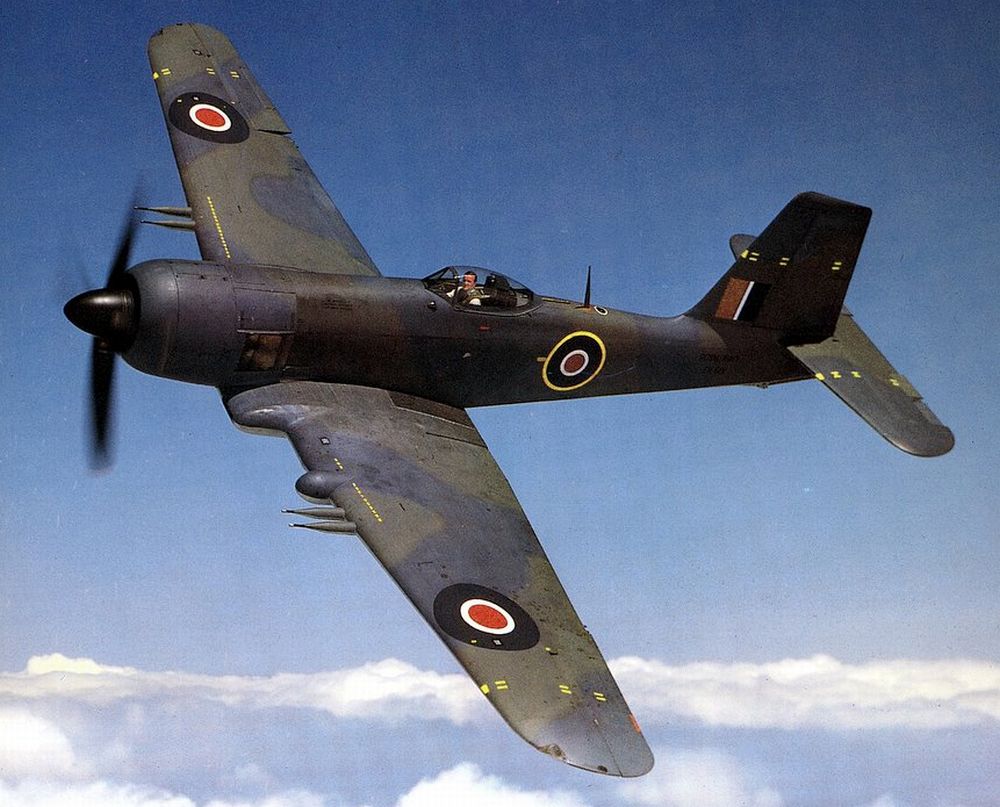
4. Westland Wyvern
“Weighing 650 pounds shy of a loaded Dakota it was nonetheless expected to operate off dinky 1950s RN carriers. Tellingly, its main claim to aviation immortality derives not from any superlative quality of the aeroplane itself but a desperate desire to escape it.” Of 127 built, 39 were lost to accidents.
Learn more about the bizarre Wyvern here.

3. Yakovlev Yak-38
The rather cute Yak-38 had a tiny range and a tiny weapon load. In some ways it had the offensive capabilities of a World War I fighter, it also didn’t like taking-off when the weather was any warmer than tepid. On a related subject, there’s a great article on Britain’s P.1154 here.

2. Blackburn Roc
A maximum speed (at sea level) of 194 mph was simply suicidal for a fighter facing the Luftwaffe’s ‘109s. Add terrible agility, no forward-firing guns and you get the idea. Wisely, the military decided the best use for it was as a static machine-gun post!

1. Vought F7U Cutlass
Today’s F-35 may get criticized for not being able to fly near an electrical storm but the ‘Gutless Cutlass’ had a very alarming tendency to flame-out in rain. Even when the engines behaved themselves it was still an underpowered flop. There’s more on Cutlass losses here.

Type selection by Combat Aircraft‘s Thomas Newdick. If you enjoyed this you will love Essential Aircraft Identification Guide: Carrier Aircraft 1917–Present .
Follow my vapour trail on Twitter: @Hush_kit
Guide to surviving aviation forums here
You should also enjoy some more of our articles: There’s a whole feast of features, including the top WVR and BVR fighters of today, an interview with a Super Hornet pilot and a Pacifist’s Guide to Warplanes. Was the Spitfire overrated? Want something more bizarre? The Top Ten fictional aircraft is a fascinating read, as is The Strange Story and The Planet Satellite. The Fashion Versus Aircraft Camo is also a real cracker.

“If you have any interest in aviation, you’ll be surprised, entertained and fascinated by Hush-Kit – the world’s best aviation blog”. Rowland White, author of the best-selling ‘Vulcan 607’
I’ve selected the richest juiciest cuts of Hush-Kit, added a huge slab of new unpublished material, and with Unbound, I want to create a beautiful coffee-table book. Order your copy now right here
TO AVOID DISAPPOINTMENT ORDER YOUR COPY NOW

From the cocaine, blood and flying scarves of World War One dogfighting to the dark arts of modern air combat, here is an enthralling ode to these brutally exciting killing machines.
The Hush-Kit Book of Warplanes is a beautifully designed, highly visual, collection of the best articles from the fascinating world of military aviation –hand-picked from the highly acclaimed Hush-kit online magazine (and mixed with a heavy punch of new exclusive material). It is packed with a feast of material, ranging from interviews with fighter pilots (including the English Electric Lightning, stealthy F-35B and Mach 3 MiG-25 ‘Foxbat’), to wicked satire, expert historical analysis, top 10s and all manner of things aeronautical, from the site described as:
“the thinking-man’s Top Gear… but for planes”.
The solid well-researched information about aeroplanes is brilliantly combined with an irreverent attitude and real insight into the dangerous romantic world of combat aircraft.
FEATURING
-
-
-
- Interviews with pilots of the F-14 Tomcat, Mirage, Typhoon, MiG-25, MiG-27, English Electric Lighting, Harrier, F-15, B-52 and many more.
- Engaging Top (and bottom) 10s including: Greatest fighter aircraft of World War II, Worst British aircraft, Worst Soviet aircraft and many more insanely specific ones.
- Expert analysis of weapons, tactics and technology.
- A look into art and culture’s love affair with the aeroplane.
- Bizarre moments in aviation history.
- Fascinating insights into exceptionally obscure warplanes.
-
-

The book will be a stunning object: an essential addition to the library of anyone with even a passing interest in the high-flying world of warplanes, and featuring first-rate photography and a wealth of new world-class illustrations.
Pre-order your copy now right here
I can only do it with your support.
 Hush-Kit
I think the Demon and the Cutlass would have been OK had the USN not turned to Westinghouse for the engines. It’s often said that Westinghouse was responsible for crippling an entire generation of USN carrier borne fighters.
The F-14 Tomcat could get an honourable mention here as it was an underpowered hangar queen for a good portion of its early career. The TF-30 engines it was originally fitted with were the cause of over a quarter of Tomcat losses; once the F-110 engines were fitted from 1987 things got better. That means the Tomcat spent nearly a full half of its USN service career being a fraction of the aircraft it could have been because of the dodgy and temperamental TF-30 engines.
Reblogged this on Bring the heat, Bring the Stupid and commented:
Feel free to make your own nominations in the comments.
They may suck, they sure look very good!
Apart from the Roc surely…
Nice post.Just one comment,the Griffon Seafire in the picture is the ultimate Seafire FR Mk 47 with its pretty 6 bladed contra-rotating propeller that cured the starboard swing tendency.
Good point!
I thought the Seafire was the wrong one (note also the enlarged fin) but my main point is I don’t think I’d get in any aircraft called the “Fireball.”
When I first saw a pic of the cutlass I couldn’t believe such a Futuristic aircraft could be so early a jet. The more I read however I knew full well it would be number 1 in this list.
A little unfair on the Firebrand and Wyvern, perhaps as after tortuous development they became half-decent aeroplanes. The two Firebrand squadrons were mostly made up of QFIs so accidents weren’t all that excessive. I’ll give you the Roc though – poor concept.
I see the Seafire image has been changed. However, I would nominate any Seafire purely because of its narrow track undercarriage.
Why not terrible Curtiess SB2C Helldiver is not in entry? I don’t mean Roc or Firebrand is better aircraft than Helldiver though…