Technical dive into a Soviet Cold War Tactical Fighter Hotrod
Mihai Vălceleanu
The Mikoyan-Gurevich MiG-23 known to NATO as the ‘Flogger’ first flew in 1967, and by the time production ended in 1985, over 5,000 had been produced. For most of its service life it was the chief fighter of the Warsaw Pact nations, and as a devilishly fast warplane available in huge numbers, it could have proved a nasty threat to anyone foolish enough to underestimate it. Often written off in the West as a dangerous (rather limited) ‘hot-rod’, many misunderstandings arose from intelligence based on immature models of this swing-wing tactical fighter. As we shall see, the ‘Flogger’, an aircraft without a direct Western analogue, was a fascinating idiosyncratic machine full of surprises.
MiG-23MLD (izd. 23-18) aerodynamic “refinements” It’s not uncommon to hear, in certain circles, that the pitot-static tube-mounted vortex generators (PVD-VG) and the second set of dog-tooth vortex generators (lambda extensions are those triangular notches at the wing root leading edge) were meant to improve the Soviet MiG-23MLD’s maneuverability over that of previous M and ML versions.
And indeed they were, but never mentioned is that they didn’t increase lift directly by energizing the flow and delaying the stall, as one would assume. They didn’t use vortex lift like the leading-edge root extensions of a MiG-29 or F-16. Instead, they increased the MiG-23’s lateral and directional static stability at high angles of attack (AoA) with side-slip. Initially, they tried the pitot tube vortex generators only, but found that the increase in AoA was not enough, so they came up with the lambda-extensions to get a sufficient improvement. The patent for the lambda-extensions has the first author listed, a certain G. S. Byushgens from TsAGI, who was awarded the title of Hero of Socialist Labor as the creator of the MiG-23’s aerodynamic layout in 1974. He also devised the big dog-tooth vortex generator on the MiG-23’s pivoting wing section in 1970-71. (some rather interesting stealth intake patents by him here)
So, how do these refinements work? Without these refinements, a MiG-23ML with the wings swept at 45°, flying at high AoA (with sideslip), would have vortices emanating from the forward fuselage and fixed-wing portions, combined and distributed in such a manner as to make the aircraft unstable in roll and yaw by acting on the nose, leeward wing, and vertical stabilizer.
The MiG-23ML flight manual states that beyond 36° indicated AoA (20.75° true AoA) the aircraft becomes directionally unstable and departs controlled flight. As such, the MiG-23ML was equipped with a stick-pusher that kicks in at 28°-30° indicated AoA. With the MLD’s pitot tube vortex generators mounted, the vortex system coming of the nose is turned into one that increases directional stability. The λ-extensions stop the nose & wing vortices on each side from combining, and thus their harmful effects on directional and lateral stability is reduced. The maximum attainable AoA with the wings swept at 45° increased to about 40° indicated AoA as a result of these two features. Judging by pilot’s accounts, a MiG-23MLD with the wings at 45° could indeed reliably outturn a MiG-23ML.
2: MiG-23MLD (izd. 23-18) automatic leading-edge flaps. Although the pitot-static tube-mounted vortex generators coupled with λ-extensions were a clear success, the next set of refinements had mixed results. The MiG-23MLD (izd. 23-18) was modified to have automatic leading edge flaps, to be used with a new 33° wing sweep position. And although these measures did indeed help to increase manoeuvrability, rarely mentioned is the fact that at some service point, they were abandoned, the automatic leading edge flaps being deactivated and reverting to the original 45° wing sweep position. Why? By most accounts from pilots, because the leading edge flaps would deploy at too early an AoA, creating much drag and buffeting for their lift benefit.
===insert MiG-29 graph===
The idea of automatic leading edge flaps is a good one, and widely used these days. But, as can be seen in this graph from the MiG-29’s flight manual, deploying them at too low of an AoA decreases the lift-to-drag ratio (К). The lower sweep angle also likely increased drag. Since the MiG-29 was already entering service, nobody wanted to spend anymore time on refining the MiG-23’s system, and was abandoned.
3. The MiG-23MF and its heavy, heavy radar It’s no secret that Soviet fighter radar technology was behind that of the West in the 1960s and 70s. Soviet radar systems were hugely heavy and bulky. The MiG-23MF was perhaps the fighter aircraft most burdened by its radar system. An empty MiG-23MF weighs about 10860 kg, with its Sapfir-23E (323E) accounting for 641 kg, representing a whopping 5.90%! For comparison: MiG-21BIS with RP-22SMA, 3.36%; MiG-23ML with Sapfir-23MLAE (N003E) radar, 4.64%; early production F-4J Phantom with AWG-10, 3.75%; MiG-29 9.12 with N019 Rubin; 3.21%. The MiG-23’s radar equipment was so voluminous, that not all of it could fit in the nose section, some of its components had to be placed behind the cockpit.
4. MiG-23 variable exhaust nozzle.
You’ll notice that I didn’t say “engine exhaust nozzle”. That’s because the exhaust nozzle flaps that one sees on the MiG-23 are not part of the engine, as we are accustomed on other aircraft engines like the F-4E’s J79-GE-17 turbojet. Instead, the nozzle is part of the airframe, and unlike other variable nozzles, is not controlled by any hydraulic system, but expands and contracts freely according to pressure differences between the exhaust and exterior flow.
5. MiG-23, Mach 2.6 speed machine. The MiG-23’s maximum Mach number stated in most sources is 2.35. And that’s correct, for reasons of temperature (cockpit canopy “silvering”) and directional static stability, the MiG-23 is indeed limited to Mach 2.35. But that’s not its true limit. According to the MiG-23M and MiG-23ML flight manuals, the maximum attainable Mach at high altitude is 2.55 or 2.6, and that’s not even clean…that’s when carrying two R-23 missiles!
MIG-23ML flight envelope
In Steve Davies’ “Red Eagles: America’s Secret MiGs, 2012” it states that James “Thug” Matheny, (Bandit 27) said he’d flown the MiG-23 up to Mach 2.5. But that was most likely a very clean MiG-23MS, no pylons and no TP-23 infrared search and track chin fairing. How about a more a more typical combat loaded case. Well for that we have one one case* during the Iran-Iraq war. In August 1983, Iraqi Air Force pilot, Ismail Al-Naqib, from the 67th Squadron Ali bin Abi Talib Air Base (Nasiriyah) claims to have reached a speed of Mach 2.6 at 11km altitude, during an intercept on probably an RF-4E Phantom II reconnaissance plane. His MiG-23MF was armed with R-23 (and likely two R-60 missiles too), and a fuel drop-tank pylon. Keep in mind, that these two cases are using MiG-23MS/MF, with the weaker R29-300 engine, the MiG-23ML had the more powerful R35-300, producing 13000 kgf instead of 12500 kgf.
* My thanks to author Milos Sipos for bringing this event to my attention.
6. MiG-23ML “thumb mounted sights” Years before the MiG-29 with its “Щель” helmet-mounted sights entered service, the MiG-23 was already making steps in that direction. The MiG-23ML with ASP-17ML & N003 had a curious system called “Метка” to steer the R-60 & R-60M’s seekers with the same button on the control stick used to steer the Kh-23M air-to-ground missile. The black button was on the lower-left side.
(c) Oscar Laborda olaborda@yahoo.es
Photo by Óscar Laborda, via Flickr.com
METKA system block from the MiG-23ML 23-12B manual.
7. MiG-23ML inlet guide vanes.
When you look at the intakes of any MiG-23, you quickly notice two horizontal plates. Those are guide vanes, and are more important than you may think.
Picture from Nowa Technika Wojskowa by Piotr Butowski.
The early MiG-23s, like the prototypes and the MiG-23S, lacked the inlet vanes. As can be seen on this MiG-23S that made an emergency landing in 1971 at Shatalovo.
(archive of T. V. Kondrashova via S. Isaev).
During testing or service, it was likely found that while flying at high AoA, the air reaching the compressor would be uneven, and as a result, cause compressor stalls. So the MiG-23S would subsequently be retrofitted with inlet guide vanes to cure this, and all production fighter/interceptor versions of the MiG-23 would have them from the factory. The fighter-bomber version, MiG-23BN, would never receive these, and as a result, high AoA manoeuvring could cause engine issues. But the story doesn’t end here, as the MiG-23’s AoA range would be extended with the ML, it was likely found that the old guide vanes’ design was inadequate, so with late production MiG-23ML (mostly export 23-12) and export MiG-23MLD (23-22), the lower guide vane would be cambered and elongated.
Ex-Syrian MiG-23MLD (23-22B). Photo by Isaac Gershman
The earlier produced MiG-23MLs would receive the updated lower guide vanes during their upgrade to MiG-23MLD 23-18 standard. Thus it’s unlikely that the MiG-23MLD would have been a success without these unassuming plates, the aircraft not being able to reach its AoA potential due to engine stability issues, despite the aerodynamic refinements.
8. MiG-23M versus Hydrogen
One factor limiting the manoeuvrability of the early MiG-23M was the rather low G limit. This was partly caused by the inadequate wing pivot support structure design, but more importantly, the high hydrogen content in the VNS-2 stainless steel used to manufacture it. This high hydrogen content made the material unexpectedly brittle, and was the cause of several catastrophic inflight structural failures. The hydrogen content problem was eventually solved with a degassing heat treatment (heating within a vacuum) on the VNS-2. The MiG-23M’s structural problems (both design and hydrogen-related) took a very long time to solve, and although later produced ’23Ms had improved wing pivot support structure designs and used degassed steel, the earlier produced ones would remain a constant source of headaches, cracks constantly appearing and requiring teams welders and their equipment to be flown across the USSR for repairing cracks on the problem aircraft. The whole thing was a fiasco – and massively expensive. The very capable General Mikhail N. Mishuk, who has an excellent engineering knowledge, was involved with managing the problem. In a moment of fury, he berated visiting staff from the Mikoyan OKB, that “It would’ve been cheaper for the country to make you product from pure gold!”. One can only wonder, how the Soviet engineers could have overlooked the hydrogen embrittlement problem. One that, at the time of the MiG-23s first flight was known for 92 years (the first paper describing hydrogen embrittlement dates to 1875)! According to a metallurgical engineer who worked on the project, Natalia M. Voznesenskaya, the reason was that nobody expected the steel, which was electro-slag-remelted, to contain high amounts of hydrogen. A small, yet very costly miscalculation. Today we know, and high-strength aerospace steels are electro-slag remelted and vacuum-arc remelted.
9. MiG-23 throttle response at high Mach. If you’re familiar with Steve Davies’ previously mentioned Red Eagles book, then you might know of a peculiar phenomenon, namely that of the MiG-23’s lack of engine response to throttle inputs beyond Mach 1.50. To some, this might seem to be a serious design flaw of the R29-300 turbojet, but in reality, this is a perfectly normal feature that probably all jet engines have. As an aircraft travels at an ever increasing Mach number, the air ingested by the intake is decelerated and compressed. This compression heats up the air, which means that for the same volume and pressure, its density decreases. As mass flow decreases due to decreasing air density, the compressor will operate ever closer to its stall limit. To combat this, engines are designed to automatically increase their idle RPM with increasing compressor inlet temperature (CIT). At high enough speeds, the CIT is so high that the idle RPM is equal to the maximum RPM. Therefore, when flying at very high Mach numbers, if you bring the throttle from full afterburner to idle, the afterburner will be turned off, but the RPM will remain at, or close to 100%.
We can see this in the F-104S/J79-GE-19 engine automatic RPM schedule. The maximum RPM line varies with CIT to adjust for varying mass flow. It’s at 100% only when CIT is 15 °C, which is the international standard atmosphere (ISA) value at sea level. Above 60 °C (M~1.6 at 11km altitude ISA) idle RPM gradually increases until at 113 °C (M~1.98) idle RPM and maximum RPM are equal. And if you bring back the throttle from full afterburner to idle while flying faster than Mach 1.4-1.5, the engine RPM will not drop bellow maximum. But thrust will indeed be reduced since the afterburner will be extinguished and the variable exhaust nozzle be set to fully open.
In the case of the MiG-23ML’s R35-300 engine, maximum high pressure rotor RPM varies from 100% under normal conditions, up to 108% at a CIT of 215°C, or Mach 2.50 at 11km altitude… remember when I said that the MiG-23 can reach Mach 2.5-2.6?
10. MiG-23UB “Свинец” radar system.
Have you ever wondered what’s behind that little white radome on MiG-23UB two-seat trainers? Well, MiG-23UB aircraft manufactured between 1970 and 1972 had the Sapfir-21MU. This aircraft is one of the early produced ones that originally had the radar installed. But in 1974 it was decided to take the radar out of all UBs.
All later produced aircraft, had lead (свинец) weights installed instead. You can see the lead weight in this picture courtesy of the Dallas Cold War Air Museum.
Mihai Vălceleanu studied aeronautical engineering at the Bucharest Polytechnic University. He grew up near the Deveselu MiG-21 air base in the nineties, and is interested in Cold War combat aircraft design and performance.
I have been producing profiles and plans for far too many years now, working with a wide range of publishers including Aeroplane Monthly’s Database artwork for over a decade. At some stage I became involved with the Battle of Britain Memorial Flight, researching the planned schemes and creating the paint guides for all the aircraft including the Chimpunks, the most recent being Spitfire TE311. One of the previous BBMF bosses, Mark ‘Disco’ Discombe since moved on to 29 Sqn after his three years as CO of the flight, the Typhoon Display Team falls under their remit and someone asked Disco if he knew anyone who could help with creating a new scheme. It would appear that I was the logical choice and explain the email last September asking if I would like to be involved.
The hardest part of the process was the invasion stripes, the shape of aircraft during WWII was broadly similar with wide wings, fuselage and a tail at the back, but the Eurofighter Typhoon is a narrow delta shape with canards and a wingspan of 10.95 metres; the Hawker Typhoon has a wider wingspan of 12.67 metres, yet a significantly narrower fuselage.
Each band on an Allied fighter was 18 inches wide, which if applied to the delta wing would dominate it so a little artistic license had to be taken. So following multiple revisions I eventually went with 75% width which keeps the ratio and hopefully will look good on the aircraft (I can’t tell how the underside looks yet as it’s not due to fly for a few more days). The positioning of the invasion stripes on the fuselage provided another layer of challenge. I was reluctant to position the bands as far aft as they were on ZK308, during wartime the bands didn’t extend into the tail empennage so it that is the reason for it being so far forward on ZJ913. Despite this, they still don’t wrap all the way around the fuselage due to the shape of the wings.
Moggy
The specific Hawker Typhoon scheme chosen was a decision made by the Air Historical Branch but it was an identifiable aircraft that flew during D-Day and has a story, being flown by Sqn Ldr Denzil Jenkins of 257 Sqn, a few other codes were discussed but FM-G was what ended up going on. Plus those in the know have already been calling it ‘Moggy’ in the office.
I’ve already mentioned the hard part of translating the scheme but the rest was a modern take on the wartime camouflage pattern with the green and grey, however, due to technical restrictions the final scheme is slightly different to the proposals. As I understand it, the design on the tail had to be mirrored so it isn’t quite as originally planned, plus the roundels under the wing were resized slightly to fit between the pylons.
The first time I saw ZJ913 much of it was masked off and the invasion stripes had just been applied by Serco in the paint shop at Coningsby but walking into the hangar before the rollout and unveiling left me briefly lost for words, it’s unlikely we’ll ever see it that clean again.
On seeing the aircraft in its new scheme, I thought..I love it. Can I show you the original designs? I’ll have to check as everything has been ‘TOP SECRET’ for the last few months
Overall, I am very pleased with the result and would hope that applying historically accurate elements such as the roundel ratio and the yellow leading edges added to it. One big difference is the underside, while Medium Sea Grey was used during wartime we agreed the current Camouflage Grey is close enough plus it makes it much simpler to add stores such as the ferry tanks without them standing out, one of the few downsides to Blackjack’s scheme.
The work done by everyone has been stunning and most fortunately the scheme was kept secret until the big reveal, I have been told that to keep it away from the cameras in the spotters car park the Typhoon was towed over to 11 Sqn at about 3 am on Monday morning, but within minutes of the hangar door opening they somehow got wind of it.
Like everyone else I’m looking forward to seeing it in the air and having talked to David ‘Turbo’ Turnbull know that the display he has put together for the 2024 season will really show off the new look. So a massive thank you to Disco, Sqn Ldr Andy Power, Flt Lt Nina Wilkinson, Sgt Polly McKinlay, Cpl Mkey Hall and I’d better not forget A/CPL Jamie Platts who do all the hard work behind the scenes with the display team.
As for projects to plug, I’m currently working on some spaceships for Dan Sharp’s forthcoming book on HOTOL (worth having a chat with him once it’s out probably) from Mortons who also have my book on the history of the BBMF. Looking ahead there will also be a rather nice book coming out to coincide with the 80th anniversary of the first flight of the Chipmunk next year plus a new set of schemes and decals for the Airfix 1/48 Chipmunk this summer that I also worked on. Keep an eye on their site for details.
In my wildest dreams…
I really like a lot of the older camouflage, so maybe an F-35B in RN markings and the black/yellow Suez invasion stripes would really be eye-catching, there is a lot of focus on WWII camo which always looks cool but does mean other conflicts and periods are being ignored. As a result, tribute schemes seem to stem from WWII, however, I would very much like to see one of the fighter squadrons revisit the interwar markings and have the bright green band stretching across the wings from roundel to roundel and a painted aluminium finish.
The secret to drawing a Spitfire
The hardest part is knowing the marks, although this applies to a lot of types where there were multiple variants and minor differences, for example Spitfire MK356 is a LFIXE but currently has a type E wing fitted. The secret (which is never easy) is getting the bumps and curves right in areas such as the cowling, especially the Griffon engine ones, when they are wrong it can really stand out.
All aircraft come with a degree of complexity, some types can be tricky if there were very few built, little in the way of photographic documentation, and no survivors such as the Vickers Windsor. But equally well-known types like the Harrier are complex due to there being plenty of airframes still around and everyone knowing what they look like. Having said that, all biplanes with exposed engines often mean as much work on the engine as the rest of the illustration.
What are your three fav camo schemes of all time?
My favourite camouflage schemes have to start with the Sea Harrier FRS.1 in the pre-Falklands scheme from 700A or 899 squadrons, while the post-war schemes are nice it was part of the move to all over grey for military aircraft that isn’t as visually appealing, plus the white/blue is very visually striking.
The current scheme worn by the F-4E of the Hellenic Air Force is very nice, a toned-down set of greys have weathered and reflect the character of the now aging Phantoms, from the illustration point of view the textures and fading are enjoyable to recreate.
Lastly without wanting to pick a particular aircraft the South East Asia camouflage used by the USAF in Vietnam is visually interesting and varied. Plus it looks good on everything from the C-47 to the F-105.
Chris Sandham-Bailey‘s artworks feature in the Hush-Kit Book of Warplanes. The Hush-Kit books are crowd-funded, volume 3 is currently in the fundraising stage, you can support it here and make it happen.
Flaming screaming balls of death and destruction are best avoided. Fortunately, once they reach service most aircraft aren’t dangerous if you use them for their intended purpose. The SR-71 for instance was an excellent spy plane but would have been a lethal crop duster. Some types however manage to sneak through the design and testing stages without all their vulnerabilities being discovered and it’s left to the crew, and in some cases passengers, to deal with the fallout. Bing Chandler has plucked ten statistically worrying rides to remind you that there were times in history when finding out the price of an onboard Kit Kat was not the most alarming moment of a flight. We could have just selected 10 pioneering aeroplanes or early carrier jets, but in the name of spreading the blame out more fairly, we have selected a more diverse cadre of calamitous shitbuckets.
Nothing screams brand recognition like having your aircraft being included in a song. It’s just unfortunate for McDonnell Douglas that the DC-10 gained this recognition through the medium of crashing. Developed at the urging of American Airlines for an aircraft to fill a gap in the market for a long-haul aircraft smaller than the 747, McD struck on the idea of a three-engined wide-body at almost the same time the competing team from Lockheed did.
McDonnell Douglas won the race with AA placing an order for 25 DC-10s in February 1968, United following with orders for 30. With a first flight in August 1970 the DC-10 was in commercial service with American just under a year later. Less than a year later, on 12 June 1972, American had their first DC-10 accident. At 11,750 feet over Ontario the rear cargo door blew off and decompression caused the cabin floor to collapse. To make things interesting multiple control cables were severed including those for the rudder and the central, number 2, engine. Fortunately, despite this, the crew retained enough control to make a successful landing.
What had gone wrong? The DC-10 was the first airliner produced by the company post the merger of McDonnell and Douglas in 1967, with management from McDonnell, previously a manufacturer of fighters, directing that the aircraft be produced on a tight budget. This included recycling of technology from the DC-8 and the sub-contracting of design work, including the fuselage, to companies such as Convair who were forbidden from directly contacting the FAA even over safety concerns.
Ground testing had revealed a potentially catastrophic situation where the failure of the rear cargo door led to collapse of the main cabin floor which incidentally carried the control runs to the rear of the aircraft. In a move that would definitely come back and bite them McD chose to ignore Convair’s memo that predicted the loss of an aircraft if adequate measure weren’t put in place to prevent it happening to an in-service DC-10. Somewhat grudgingly after the American Airlines incident the locking mechanism was modified, and an inspection window added.
On Sunday 3 March 1974 the aft cargo door on a Turkish Airlines DC-10 failed at around 12,000’ shortly after leaving Paris Orly airport. This time there would be no survivors, the aircraft crashing into woods to the north of Paris killing all 346 onboard. Investigators discovered the airframe in question had incorrectly been recorded as having the cargo door modification implemented.
Although the cargo door lock would ultimately be fixed 32 of 386 DC-10s would be lost in accidents with engines failing, or even falling off, being a leading cause most famously at Sioux City where the catastrophic failure of a fan disc in the centre CF6-6 left the crew barely able to control the aircraft via use of differential thrust.
Fortunately, the lessons of the DC-10’s development were identified so when McDonell Douglas and Boeing merged there were no issues with a profits-motivated management system being imposed on an engineering-led company…
9. Tupolev Tu-104‘Moscow Mule’
Some Russians like to claim the Tu-104 was the world’s first jetliner, on the spurious grounds it didn’t suffer a break in service while it had problems rectified. This overlooks the trifling facts that a) it was still second and b) it had a lot of problems that should have been rectified. Based on the Tu-16 Badger bomber the Camel replaced the bomb-carrying fuselage with one more suited for passengers, but retained everything else.
The cabin was remarkably well furnished with brass-like alloys and mahogany covering the internal framing, while the overhead luggage racks would not have looked out of place on a Victorian railway. Less assuring was the pre-positioning of oxygen masks in the seat back pockets, or the pressure bulkhead between the cabin and the cockpit. The cockpit itself held an impressively large crew of 5 and included glazed nose position for the navigator.
Entering service during the awkward pause in Comet operations the Tu-104 was the world’s only jet airliner for a brief period. What it wasn’t was particularly safe. The controls were heavy, the type was unstable, and the highly swept wings had adverse handling characteristics approaching the stall. Acceptable in a strategic bomber but not ideal in an airliner. The tendency to pitch up violently, or enter an uncontrollable dive at the stall led to pilots flying the approach 50 km/h faster than the intended speed often creating problems that the brake chute couldn’t solve.
1958 saw three aircraft lost in accidents with subsequent years seeing a steady drum beat of losses. 32 aircraft were lost in accidents before the type was withdrawn from commercial use, while another aircraft was hit by a missile after a training exercise went awry. Aeroflot withdrew the Tu 104 in 1979 after a false fire alarm led to an aircraft crashing while returning to Moscow airport killing 58 of 119 onboard. The Russian military continued using the type until 1981 when a Soviet Navy example crashed due to improper loading of cargo, killing 16 Admirals in the process.
With 201 aircraft built the Tu-104 suffered a loss rate of 16%, better than the next entry but substantially worse than just about any other jet airliner.
8. de Havilland Comet‘Ghosts in the wing’
After years of wartime austerity, the de Havilland Comet showed the world that Britain was still at the cutting edge of civil aviation. The world’s first jet-powered airliner entered service with BOAC in 1952 heralding a golden future for the country’s aviation industry. Unfortunately, the Comet then refused to take-off. Literally.
Before anyone had even heard of metal fatigue, on 26 October 1952 a BOAC aircraft ran off the end of the runway at Rome’s Ciampino airport the aircraft stubbornly refusing to leave the ground despite the nose being held in the air. Barely four months later a Canadian Pacific Airlines example taking off from Karachi suffered the same phenomena, this time tragically gaining the Comet the un-coveted title of first jet airliner to suffer a fatal accident when all 11 onboard were killed.
Why was this happening? The approved take-off technique involved lifting the nose gear off the ground at 75-80 knots and holding a 2-3° nose up attitude until flying the aircraft off the ground at around 110 knots. A few factors counted against the pilots in these incidents. The Comet artificial horizon had no pitch markings so the nose up attitude was entirely visually judged, the two accidents happening at night give the first clue as to what may have gone wrong. Adding to the pilot’s difficulties the early hydraulic controls had no feedback mechanism just a spring to centre them, consequently the force to make a given movement of the controls was the same no matter what speed the aircraft was travelling. Finally, and crucially, the Comet’s wing created excessive drag if the nose was held too high, while the intakes struggled to provide the engines with sufficient air. All the ingredients were in place for a tragedy, obviously in the enlightened flight safety regime of the time the investigations found the accidents were entirely due to pilot error.
After the second accident DH at least discovered the issue with the wing, re-profiling the leading edge. Meanwhile BOAC directed its pilots to add 1000’ to the take-off run and keep the nose on the ground until they’d reached V2 and the aircraft could climb away even with one engine failed.
To keep everyone on their toes in May 1953 another BOAC Comet plunged into the ground just after take-off from Calcutta, this time issues with the wing leading edge weren’t to blame as they were no longer attached to the airframe. This was determined to be due to the pilots over-stressing the aircraft in turbulence, all Comets were subsequently fitted with a weather radar to give them a chance of avoiding turbulence, and artificial feel to give the stick monkeys an indication they were in danger of being too enthusiastic.
Keeping to the annual schedule in January 1954 in one of the more famous aircraft accidents, G-ALYP came apart in flight over the Mediterranean with the loss of all onboard. The Abell Committee was established to investigate it and in a no way politically motivated move the Comet was returned to flight on the 23 of March 1954. Two weeks later G-ALYY repeated the trick disappearing near Naples. The Comet’s Certificate of Airworthiness was revoked and the Cohen Committee was established to do what the Abell Committee should have.
Contrary to popular legend this was not due to the Comet having square windows. Or even windows. The crack in the fuselage that caused the first disaster actually promulgated from a rivet hole around the cut-out, or window, for the ADF mounting which had been damaged and repaired during manufacture. The Comet’s actual windows had perfectly sensible rounded corners, the manufacturers of the Mosquito not being complete amateurs. Even in the water tank testing as part of the investigation, the windows remained intact with failure occurring at a bolt hole.
Where de Havilland did show a lack of experience, because they were literally the first people to produce a jet airliner, was in the manufacturing techniques used. These, combined with the thin-gauge metal construction to keep the aircraft’s mass as low as possible, made it liable to stress concentrations at the rivet holes which were punched into the material. It was these punched rivet holes that were the initiation points for the explosive decompressions. Both rivet holes manufacture and skin thickness were improved for the subsequent Comet models but the reputational damage was already done and the aircraft would never fulfil its early promise. In total 114 Comets were built with 25 being lost, 7 alone in the first two years of operations.
The Gloster Meteor is sometimes overlooked by the kind of people who fetishize Nazi wonder weapons on the grounds it was less glamorous than the swept wing, axial flow engined Me 262. On the flipside the Meteor’s conservative ruggedness meant it could go longer than 25 hours without needing its engines changed and managed more than a couple of years in service before the regime that created it ceased to exist under the weight of its own contradictions, and Allied artillery. In fact, thanks to Martin-Baker two of them continue in use today as ejection seat test platforms, take that Messerschmitt.
That’s not to say it was without its faults, however. The endurance could be measured with an egg timer and an engine failure on take-off could be fatal as the remaining engine, far from the centre of gravity caused extreme adverse yaw. In some cases, pilots would have their own personal critical speed for asymmetric flight based on their leg strength. Other gotchas included selecting the air brakes with the undercarriage and flaps already down, the resultant blanking of airflow to the tail leading to a dive. The limited navigation aids available at the time also caused issues, on one occasion in 1951 a flight of three aircraft from 203 Advanced Flying School at RAF Driffield found themselves having to descend over the sea to gain visual flight conditions. Making their way in poor visibility and low level towards the coast the flight lead spotted Flamborough Head at the last moment and narrowly avoided it, his two wingmen were not so lucky.
Combined with a lingering wartime approach to training and safety the scene was set for some horrendous losses.
On 18 June 1951, three Meteors crashed at Biggin Hill in two separate accidents during a display to commemorate the Battle of Waterloo and Churchill’s ‘Finest Hour’ speech. Rather awkwardly this was in front of the man himself and the then Princess Elizabeth. 1952 saw 150 Meteors lost in RAF service, 30% of losses for that year, nearly 3 a week the next highest figure being for Vampires with a mere 82 being lost. The following year saw a slight easing off with only 143 Meteors lost. In total, the RAF alone lost 890 Meteors, accounting for 22% of the production run.
6. Vought Cutlass‘The Gutless Cutless’
The Vought Cutlass still looks like it came from the future today. Unfortunately, it’s a future with a very laissez-faire approach to safety (something like the new future being laid today by those walking back environmental policies).
More or less a tailless cropped delta with two vertical stabilisers mounted midway along each wing the early F7U-1 models were powered by two Westinghouse J34 turbojets, engines whose performance could best be described as asthmatic. It was replaced in the later F7U-3 models by the J46 which at least provided 50% more thrust although this was still only 60% of the 10,000lbs that had been promised. With a lack of thrust being one Achilles heel, a complicated high-pressure hydraulic system was another. In the F7U-1 failure of this could leave the pilot with no control for 11 seconds while pressure bleed down enough for manual control to be taken. While the F7U-3 gained a second independent hydraulic system the 3,000psi operating pressure ensured a steady flow of fluid left the aircraft.
A third weak point, was the fragile nose gear. As if having the cockpit 14’ off the ground at a 9 degrees attitude wasn’t enough for landing and taxiing it was raised to 14 degrees, and in a foreshadowing of the Phantom a full 20 degrees for take-off. Unfortunately. this made the whole spindly assembly liable to collapse on landing, or worse punching up through the cockpit floor into the bottom of the ejection seat causing it to fire. Which was at least more than the activation handle did most of the time, one maintainer successfully carrying out a full inspection of the mechanism despite having forgotten to remove the firing cartridge.
A Cutlass from VF-124 aboard the USS Hancock crashes into the flight deck in 1955. The pilot, Lt. Cmdr. Jay Alkire was killed in the accident. (U.S. Navy)
As a carrier aircraft its greatest weakness, of many, was the 23 degree nose high attitude on approach which essentially guaranteed that if you could see the ship you were doing it wrong. The feeble output of its engines meanwhile meant afterburner was often necessary just to maintain the glide slope. An amusing design flaw meant that while in afterburner the transfer tank that fed fuel to the engines could be drained faster than it was being replenished from the rest of the system.
Embarrassingly these issues couldn’t be blamed on a rapid development programme, Vought were awarded the contract for what would become the Cutlass in June 1946 while the first frontline squadron, VF-81, wasn’t formed until April of 1954. Even then Cutlass squadrons seemed to spend as much time being ordered off their parent carriers as on, with VF-124, VA-84, VA-66, VF-83, and VA-212 banished from the Hancock, Forrestal, Ticonderoga, Intrepid, and Bon Homme Richard respectively between 1955 and 1956. Unsurprisingly the Cutlass was withdrawn from fleet operations by October 1957, only three and a half years after entering service, although some would remain in second line use until March 1959 primarily for trials work.
78 of 320 Cutlasses were lost in accidents in only 55,000 flying hours making it the most dangerous US Navy jet of all time. Still that’s amateur hour compared to the next entry.
5. Supermarine Scimitar‘If it looks right, it crashes right’
Supermarine were purveyors of a fine range of flying boats and one reasonable fighter. The Scimitar was neither. Although to be fair on paper it was at least better than the Cutlass, the two engines each producing actual thrust, 11,000lbs each without even bothering with an afterburner. Although the overly thick wing, to allow free take-offs from a carrier, did stop it being supersonic in much other than a dive. There are however some undeserved myths about the ultimate aircraft from the Supermarine stable. For instance, the mathematically impossible claim that it required 1000 maintenance hours per flying hour, or that its accident rate was due to flying from the RN’s diminutive carriers.
The Scimitar only had four accidents on an aircraft carrier. Famously 803 lost its Commanding Officer after he’d landed on but failed to notice the cable had pulled out while attending to matters inside the cockpit and fell off the forward edge of the angled deck. Although not directly attributable to the size of the carrier presumably if Victorious had been bigger he might have had a chance to realise what was happening in time. Another Scimitar suffered a cable break and also fell off the flight deck, a third suffered brake failure while taxiing to the catapult, while a fourth ditched after bolting. In the latter three accidents the pilots survived albeit slightly damp. A fifth aircraft suffered an engine failure on approach but its hard to claim that’s directly connected to operating from a carrier, at least one Scimitar burying itself near Lossiemouth after suffering the same issue.
Scimitars also suffered nine losses due to hydraulic failures, 5 due to engine failures, a couple each due to bird strikes, fuel leaks, or Controlled Flight into Terrain, oddly both times with RAF exchange aircrew conducting Army cooperation. There were also 7 losses for unknown reasons, which sound mysterious but to be fair once something crashes into the ocean it can be hard to find the remains. In a slightly unusual twist two of the three surviving Scimitars were involved in a mid air collision over Malta in April 1964 when 807 squadron was on its way back from the Far East.
Overall of 76 Scimitars built, 39 were lost in accidents a staggering 51% all essentially in peace time the closest they came to a hot war being deterring an Iraqi invasion of Kuwait in 1961.
4. C-87 Liberator Express‘Liberator of corporeality’
The B-24 Liberator was one of the best heavy bombers of the Second World War, and in its ASW variants was responsible for sinking more submarines than any other aircraft in history. The C-87 transport version would enjoy none of its siblings’ success.
Aside from the obvious move of converting the bomb bay into a cargo area by installing a floor the area forward of the cockpit was also utilised by adding a hinged loading hatch. The main cargo area being accessed via a door on the port side of the aft fuselage. Able to carry up to 25 passengers or 12’000lbs of cargo the Liberator Express was a significant upgrade on the existing C-47 fleet. Unfortunately due to the priority given to its bomber cousin some shortcuts were taken in the C-87’s production.
Most significant was the frequent installation of a lower boost supercharger which would adversely affect its high-altitude performance. Not that that could come in useful while crossing the Hump from India in to China over the highest mountain range on earth… The ability to handle more ice than you get in a McDonalds’ soft drink would have been useful as well. Meanwhile, the electrical and hydraulic systems would not have been out of place on a British-built car of the 1960s, 70s, or 80s. The nose gear was prone to breaking on landing, the shock of regularly landing with a full load in the bomb bay not being something the design had originally been intended for. To add extra spice internal loads were prone to shifting throwing the centre of gravity out of limits.
Ernest K Gann hated the type and devotes a large portion of ‘Fate is the Hunter’ to detailing its myriad faults while nearly using one to inadvertently destroy the Taj Mahal after taking-off with three tonnes more fuel than expected. The good people at Consolidated not thinking fuel gauges were a high priority. What Gann didn’t mention is the C-87’s loss rate which at over 50% was higher than that of the B-24 with 152 of 287 lost, all but two in the first three years of operation. In comparison despite being shot at on a far more regular basis around 6,000 of over 18,000 Liberators were lost. Which is bad, but not 53% bad.
3. Fairchild F-105 Thunderchief ‘Elmer Thud’
The Republic F-105 Thunderchief had an auspicious start to life with the first two prototypes breaking their backs in landing accidents. Given the airframe needed a complete redesign to reach the contracted Mach number this was probably less of a problem than it at first seemed. Although it wasn’t an encouraging sign when after all the modifications to achieve that were done the third prototype very nearly did the same thing. In this case the main gear refusing to extend as the engine auxiliary intakes, located in the gear bay, had opened and the suction from the Pratt and Whitney J-75s was holding the doors firmly shut. In a cruel twist with the engine shut down the test pilot was walking away from the aircraft only for it to slowly hoist itself up onto its wheels, the hydraulics being able to overcome gravity if not vacuums.
Despite these early set-backs, the USAF decided to equip the Thunderbirds display team with nine modified F-105Bs. This essentially involved replacing the weapons system with one for coloured smoke and allowing the flaps to be deployed at up to 500 knots. By 16 April 1964 the team were ready to display with the Thunderchief, by 9 May they’d lost a pilot and an aircraft in a landing accident during a public display at Hamilton AFB and the team reverted to the Super Sabre.
Later that year US involvement in Vietnam would escalate with the Gulf of Tonkin incident and a whole new raft of problems with the F-105 would emerge. Aside from the excessive heat and humidity requiring modification to the Thunderchief the single hydraulic system controlling the horizontal stabiliser soon emerged as a weak point. Damage to the system would force the aircraft into an irrecoverable dive several aircraft lawn darting into the jungle. Republic soon developed a mechanical lock to prevent runaway before the long term fix of an additional hydraulic system was introduced. Despite this and the introduction of a Radar Homing and Warning System (RHAWS) F-105s were falling to North Vietnamese air defences, primarily guns, at a shocking rate. At least 60 were lost in 1965, 111 in 1966, and a further 97 in 1967.
In all 334 Thunderchiefs were lost in combat over Vietnam nearly 20% of USAF losses and 40% of all F-105s produced. Even in the context of a war this was bad when compared to loss rates for aircraft in WW2. A further 63 were lost in accidents in South East Asia while when other losses are included well over 50% of all Thunderchiefs produced were lost. The F-105D was withdrawn from Vietnam by 1970 with only the F-105G Wild Weasel seeing out the war and from 1974 it was the only variant to remain in service.
2. Latécoère 631‘Dodgy latte’
Credit: Oldmachinepress.com
The Latecoere 631 was perhaps the ultimate in late ‘30s flying boats, with its six engines, a max take-off weight of 75 tonnes, and a cockpit perched so far back from the nose it has to be assumed most of the ocean was obscured to the pilots on landing. Its aero-sexual credentials being enhanced by the twin vertical tails and that Cyrano-esque nose housing a bar. The only minor issue, a quibble if you will, was that thanks to the intervention of the Second World War it didn’t actually enter operational service until 1946. It also crashed quite a bit, which is why it’s here.
Development of the 631 continued in Vichy France and then under direct German control, its utility as a maritime patrol aircraft being obvious. Consequently, the first aircraft found itself in Luftwaffe markings on Lake Constance, before being sunk by Mosquitos in 1944. Thanks RAF. Despite this minor setback by the end of the war orders for an additional 10 631s were being fulfilled and the second aircraft had made a successful return flight to Dakar by early August 1945.
Credit: /www.sim-outhouse.com
The first inkling that the 631 may need improvement came somewhere in the South Atlantic in October 1945 when the same aircraft, F-BANT, was enroute between Rio and Montevideo. The propeller on the number 3 engine decided it had had enough and departed the aircraft. One blade damaged the number 2 engines prop and almost ripped the engine from its mounts. Tragically another ripped through the fuselage killing two passengers. In this case the aircraft was recovered, initially by redistributing engines between the wings so it could make a short hop as a four-engined aircraft to Montevideo for the full repair package to be carried out. Despite this deliveries to Air France continued and it wasn’t until February 1948 when the barely a month-old F-BRDR flew into the English Channel in bad weather, either due to pilot disorientation, icing, or hitting debris from the Normandy landings while trying to land.
August 1948 saw F-BDRC disappear over the Atlantic, only a few small pieces of debris being discovered by the USCG. With the writing on the wall for flying boats Air France took the opportunity to cancel its orders and the French government, with nothing better to do, created a new company SEMAF to use them as cargo aircraft. Meanwhile, F-WANU was used to attempt to discover what had led to F-BDRC’s loss. This led to the theory that at certain RPMs the engines were operating at the resonant frequency of the wing and aileron causing them to fail. Certainly, this was what caused F-WANU’s left aileron to depart and the aircraft to crash into the sea killing all onboard. So definitely a possibility.
This site will pause operations if it does not hit its funding targets. If you’ve enjoyed an article you can donate here.
Another company, La Société France Hydro was now formed to use two of the remaining 631s for cargo operations. However, when one of these broke up in a thunderstorm over Cameroon in 1955 the game was finally up. Presumably as it was becoming increasingly hard to find anyone willing to get on one. In early 1956 to add insult to injury the 5th, 10th, and 11th examples were written off when snow collapsed the roof of the hangar they were stored in.
Four of 11 Latecoere 631’s were lost in accidents with all onboard dying, making it one of the more dangerous airliners ever to fly, even more so when you consider another four of the 11 never saw operational service as an airliner or even cargo aircraft.
Yokosuka MXY-7 Ohka ‘Suicide is easyish’
Aircraft designers must regularly deal with conflicting requirements to achieve what the customer wants. Almost inevitably this will include bringing the crew and passengers back in a fit enough condition to make another flight. It must have been a pleasant relief for the students of the University of Tokyo’s Aeronautical department then when asked to work on a design that explicitly did away with this limitation.
The brainchild of one Ensign Mitsuo Ohta work started on the design in 1943 but production wouldn’t begin until 1944 when the Imperial Japanese Navy’s Yokosuka arsenal took on the programme. A 20’ long tube with stub wings the Ohka sandwiched a half-trained pilot between a 2,645lb armour piercing warhead and a 4,500lb thrust solid fuel rocket motor. Perhaps surprisingly there was armour plating at the rear of the cockpit the pilot not being completely disposable. Although the use of a human as the guidance system for a missile raises some ethical dilemmas it was at least arguably more human than B J Skinner’s proposal in the US to train pigeons to perform the same role, given they had no opportunity to say no.
With a ton of explosives, an approach speed of over 450 knots, and the most advanced guidance system available to mid-20th century mankind the Ohka was then presumably a highly effective weapon that significantly delayed allied forces reaching the Japanese homeland? Not so much. Although kamikaze attacks in converted fighters and attack aircraft had shown limited success in sinking shipping the MXY-7 had an Achilles heel. Unable to take-off under its own power the manned missile had to be carried to its destination by a converted Mitsubishi G4M Betty bomber, who’s own performance was compromised by carrying two tons of suicide machine. In fact the G4M’s ceiling was reduced to a mere 16,400’ when loaded with the Ohka and on their first mission to attack Task Force 58 near Kyushu on 21 March 1945 all the bombers were intercepted before they were within 50 nautical miles of their target. Given this was well outside the MXY-7’s 20nm range it remains an unanswered question what happened to the few that were jettisoned by the Betties as they tried to evade the attacking Hellcats.
The Ohka’s performance didn’t really improve during the remainder of the war, the lack, of post-mission feedback probably not helping. In fact, only one ship, the USS Mannert L Abele was sunk by the MXY-7 having already been hit by another kamikaze aircraft, 84 personnel were believed killed. Given there were 74 Ohka missions and the Betty carrier aircraft had a crew of up to seven, it’s entirely possible more Japanese lives were lost in Ohka missions than American. At the same time when the deaths onboard the Bettys are taken into account it must be the only aircraft in history to have killed over 100% of its crew.
The aircraft listed here were, with one exception, more dangerous than they should have been, but in most cases, this was also a sign of the times. For example, entries 2-10 could have been filled with jet fighters from the 50s and 60s which probably would have been more statistically accurate, but would also have got a bit predictable.
Cigarette and tea companies had harnessed the power of collectible cards to aid sales from at least the 1930s. The huge success of the Brooke Bond Tea military aircraft card series in the 1960s inspired a series of ultra-specific military history books from Osprey. Since their first book on USAAF P-51 units – published, from memory, in 1968 – Osprey has produced a bewildering array of books on every conceivable military subject from the Tarentine Horseman of Magna Graecia to Vulcan Units of the Cold War. Osprey has followed the general trend in specialised aviation books toward greater technical detail on ever more specific subjects, which can be fascinating or boring depending on the particular topic in question. The Sturmjägers, the heavily armed and armoured Fw 190 close-range bomber killer variants, are certainly exciting subjects. The men themselves are fascinating, a motivated cadre of pilots trained to take down enemy bombers at virtually any cost, even using ramming when required.
The details of the text, and the darkly understated pilot quotes, are illuminating – and are backed up by the quality of the many illustrations and diagrams. The subject of the Luftwaffe in World War II can having an ickiness factor, especially with such exciting artworks and a book taking a largely German perspective, but this is neatly sidestepped by the quality of the research and the focus on the tactical, analytical and technical. The author, Robert Forsyth, is impressively knowledgeable on his subject and has clearly spent a great deal of time immersed in Luftwaffe history. The result is a highly readable book charting the desperate defence of the Reich in 1943-45 and the human and technical story of a terrible era in aerial warfare. Much recommended.
In an attempt to create an article concept so complex that even the editor doesn’t really understand it, Hush-Kit teamed up with our in-house number cruncher Eddie Rippeth to compare marks of Spitfire to periods of David Bowie’s life. To further bewilder you, we have added the number of aerial victories, kills per airframe, and a combat history highlighting the Spitfire’s phoenix-like abilities to be reborn and save the day (I think).
In 1947, production of the Spitfire ended and David Bowie was born, so couldthe British musician have been a reincarnation of the fighter aircraft? There are certainly some parallels. The reason for the godly success of the Spitfire was its capacity for reinvention. Having achieved stardom early in its career, the svelte androgynous Spitfire suffered some knocks but always reemerged to further greatness. With an almost infinite gift for re-invention, it was truly the David Bowie of fighters – it knew when to change, to experiment, how to turn failure into success, and through these reinventions it became this immortal superstar fighter, achieving lasting fame (♫fame ♫)well beyond its realm of combat. And like any superstar and subject of mass attention, its achievements are revised, questioned, contrasted unfavorably, reduced, and even ridiculed.
To explore the Spitfire superstar phenomenon, I have pulled out the ten most significant fighter marks – focusing on their statistical performance to show how the Spitfire went through cycles of success, failure and reinvention that uniquely kept it a front-line first-choice fighter for the entire duration of the Second World War. As always with aerial combat statistics, it comes with some major caveats*.
10. Spitfire Mark I: Ziggy Stardust: a superstar is born
1353 victories (3rd highest) Victories per airframe: 0.86 (1st) Top aces: Eric Lock 21; Colin Gray 16.2; Brian Carbury 15.75
It doesn’t need restating but I’ll do it anyway, but in its first version, the Spitfire played the starring role in the most significant air battle of all time. Not only that, but as a warm-up, the Spitfire was thrown into the equally desperate struggle of Dunkirk to make its proper debut in battle. The only argument is the degree to which the Spit I deserves the plaudits, given the work by its more numerous partner, the more rugged Hurricane. What isn’t in doubt is that no fighter marked its arrival with a bigger victory. With the Spitfire Mark I, a star was born.
The first two Spitfire aces over Dunkirk, both going on to further great success – 92 Squadron’s Bob Stanford Tuck and Al Deere of 54 Squadron.
The Spitfire I scored 19 victories in the Phoney War, starting with Heinkel He 111 over the Firth of Forth on October 16 1939. Unlike the Hurricane, they were kept out of the disasters of Norway and France. A true baptism of fire came on May 21, when sixteen Spitfire squadrons rotated in and out of the air battle over Dunkirk. Over the next ten days, Spitfires made 161 claims for 62 losses (slightly less on both counts than the Hurricane), while blunting the Luftwaffe effort enough to enable the evacuation. It was a challenging debut – poor RAF tactics like the close ‘Vic’ formation (an inflexible formation usually featuring three aircraft) contributed to unnecessary losses, as did the attempt to introduce the Big Wing (a mass formation that took time to assemble). On the plus side, pilots who would become indelibly associated with the Spitfire, namely Al Deere, Bob Stanford Tuck and Sailor Malan, emerged as aces. On 2 May, the Spitfire also became indelibly imprinted on the Luftwaffe. Luftflotte II’s diary recorded, ‘a bad day… With sixty-four aircrew missing, seven wounded and twenty-three aircraft gone, today’s losses exceed the combined total of the last ten days.’ Leading the way was Sailor Malan’s 74 Squadron, who set about a squadron of Dorniers, according to commander, Major Werner Kriepe, ‘with the fury of maniacs’. Spitfires made a mockery of their eight-machine gun armament being too light by destroying at least sixteen bombers and making ten further claims, and in doing so, inflicted significant pain on the Luftwaffe at a critical moment in the evacuation.
Dunkirk was followed swiftly by the Battle of Britain, the most intensive few months of fighter combat in RAF history. Opinion is split on just how much credit the Spitfire deserves in the battle, but a prevailing view now is that the Hurricane was the key fighter, as it was more numerous and scored more victories.
Something in the Air
As always, there is an element of truth here, but this shouldn’t be overstated. The fact that the Spitfire was at least a match for the Me 109 was an absolute keystone to battle tactics – and to victory. Indestructible Kiwi ace Al Deere explained in his bio Nine Lives: ‘the policy of using selected Spitfire squadrons thus enabling the remaining squadrons, and this included the 12 Group Hurricanes, to concentrate more effectively on the bombers. On numerous occasions (I) witnessed the rewards reaped when enemy bombers, shorn of their escort, were set upon by the defending Hurricanes, which, excellent as they were, could not have coped so effectively without the intervention of the Spitfires.’ As the table below shows, Spitfires shot mainly fighters down, while Hurricanes, a (marginally) better gun platform, recorded a higher proportion of bombers. Spitfire squadrons also tended to be higher scoring. It’s fair to say that more Spitfires could have won without the Hurricane, but vice versa would have been much more difficult, as Me 109s would have more opportunity to achieve dominance over the less agile Hurricanes, something which would occur with horrible frequency in 1941. But it’s also very fair to say that under skillful radar-directed fighter direction, the Hurricane and Spitfire both shot down a lot of aircraft and that’s what won this crucial battle.
Total est. victories
Victories/ squadron
Me 109
Me 110
Ju 87
Bombers
Spitfire
1156
60.8
59%
12%
4%
24%
Hurricane
1480
46.25
38%
20%
9%
33%
Yet despite this monumental contribution to one of the most consequential air battles of all time, the Mark I would disappear in the blinking of the eye. Though the Merlin II /III engines were competitive in 1940, they rapidly fell behind German competitors by early 1941. The Mark I had already needed an upgrade with hastily fixed constant speed blades post-Dunkirk, and then throughout the Battle of Britain, a key problem was that the carburetor flooded the engine in an inverted dive, giving clued-up Luftwaffe fighter pilots a get-out-of-jail card. The Spit IB introduced wing cannon, although this proved unreliable and problems weren’t fully ironed out until the Mark V. As a result, the Mark I was being phased out even before the end of the Battle of Britain.
Pre-order (yes that's a word) the rather lovely Hush-Kit Book of Warplanes Vol 3, it's currently in the fundraising stage and awaiting your pre-order to make it happen: https://t.co/RDADANS73Lpic.twitter.com/dXzzJ933uY
— Hush-Kit Aviation News, History & Satire (@Hush_Kit) April 24, 2024
Joe ‘the Lion’ Smith was chief designer of the Spitfire throughout the war.
The Buddha of Rhubarbia
This phasing out of the Mark I was perhaps fortunate for its impeccable combat record. As it was entirely replaced by Mark IIs by March 1941, just four Mk 1s were lost in Leigh Mallory’s ill-conceived Circus and Rhubarb operations. The Mark I’s victories would be almost entirely achieved in the calendar year of 1940, with Dunkirk, the Battle of Britain, and the final two months of action post-Battle giving the Mark I its final total of 1,353. There is overclaim to be factored in here – and Battle of Britain Day itself is renowned for the 175 claimed yet just 56 actual Luftwaffe losses – a 3 to 1 overclaim. However, throughout the whole battle, September 15th’s extravagance was partially balanced by days of underclaiming, notably in October**, so overall the overclaim for the Battle was about 1.5 claims to a single loss. With an overclaim ratio of slightly over 2 during Dunkirk, overall we can be confident that the majority of Spitfire I claims were actual Luftwaffe losses.
**The Parliamentary record in Hansard in 1947 records 325 Luftwaffe losses in October 1940, against just 260 RAF claims.
Top-scoring Mark I pilot and also leading ace of the Battle of Britain, Shropshire’s Eric ‘Sawn off’ Lock, with 21 of his final total of 26 victories in the mark.
9. Supermarine Spitfire Mark II: The Fighter That Fell to Earth
334 victories (4th) 0.36 per airframe (4th)
Top aces: Douglas Bader 10.5; Harbourne Stephen 7.5
Fated to be one of the most overlooked marks, the Mark II arrived towards the end of the Battle of Britain, with Sailor Malan’s 74 Squadron the first to receive it on 24 September. Such was the pace of fighter development, it was being replaced by the Mark V in the spring of 1941.
Low
Something in the Air
There was plenty to fix on the Mark I so the Mk II included some sensible developments. It featured an uprated Merlin XII engine with 140 more horsepower, while experimentation with cannon armament continued. Spitfire IIs would also all be fitted with the ‘Miss Shilling’s orifice,’ in early 1941, which prevented the engine cutting out when inverted or rolling. Yet perhaps the main significance of the Mark II is that it was the first to be churned out by the controversial state-financed Castle Bromwich plant, once Lord Beaverbrook had fired Lord Nuffield for its chaotic failure to deliver earlier Spitfires, a failure which might even have cost the war.
The Spitfire Mark II, in outward appearance almost identical to the Mark I.
In combat, it provided a modest step forward on the Mark I, but it was released at a time of hectic combat and so apparently achieved a decent number of kills per air-frame. However, over two-thirds of these victories were during the Douglas / Leigh Mallory ‘lean towards France’ – and in July 1941, the month of peak folly when 116 Spits were lost, nearly half (54) were Mark IIs. This was the period when RAF overclaiming reached 5 to 1, so it seems very likely the Mark II had both the highest overall overclaim rate of any Spitfire mark, and even worse (and uniquely), suffered more air-to-air losses than actual victories. One of these losses was the iconic legless ace Douglas Bader, who top-scored with the Mark II but was shot down / collided on August 24 1941, spending the rest of the war as a PoW. Mark IIs scarcely outlasted Bader’s participation in the war, being mostly phased out by late 1941, outclassed by the new Focke-Wulf Fw 190s and Me 109Fs. Sadly, no one in the higher echelons of Fighter Command thought to send the Mark IIs elsewhere – it might not have been a match for the latest Luftwaffe fighters, but it would have made a heck of an improvement on the Brewster Buffalo.
2560 victories (1st in list of Spitfire variants by kill)
0.39 victories per airframe (3rd)
Top aces: George Buerling (Can) 29.33; Jamie Rankin (Eng) 18.75; Adrian Goldsmith (Aus) 16.25
The disappointing third album which gets critically panned and finds an unexpected cult following overseas.
The Mark V is never anyone’s favourite Spitfire. It was clearly outclassed by the Focke-Wulf Fw 190, whose arrival caused a major panic in RAF circles, and even led to a loss of faith in the Spit itself. Its reputation was tarnished by association, as it represented the bulk of Spits used during Douglas and Leigh Mallory’s ineffective and wasteful Circus and Rhubarb operations of 1941. Mark Vs were also the first to model Vokes and Aboukir filters, the clipped wings – and other such abominations which undoubtedly defiled the original Spit’s sleek beauty <Eddie’s views on clipped wings do not represent the Hush-Kit site>. Pilots even compared it unfavorably with the Mark II. Even the aviation history writer Bill Gunston derisively captioned a flight of Desert Air Force Spitfires as among the slowest ever built. As the first Spitfire to be exported, it was despised by the Soviets, who briefly used and abused 200 Spitfire Vs during the Kuban campaign, and ultimately rejected it for the Airacobra. Even in Australia, it disappointed in the raids over Darwin where it failed to dish out the expected trouncing of Japanese raiders (although it still saw them off with minimal damage to northern Australia).
So the Spitfire V bore the unusual burden of not being the best fighter for much of its service. The type had built on the improvements on the Mark II – notably in that the cannon for the VBs and VCs (introduced in the IB) were much improved in efficacy. Some Spit VCs even switched to four 20mm cannon. And in reality, it was less the plane and more the engine that was the issue – the Merlin 45 could deliver 1,460 horse-power, an excellent output on the Mark V’s introduction in 1941, (and of course it included the questionably nicknamed ‘Mrs Shilling’s Orifice’, a modification that meant the Merlin no longer cut out in an inverted dive). However, in September 1941, it fell very clearly behind in the horse-power race when the Focke-Wulf Fw 190A arrived, with 1700hp-plus with its BMW 801 engine, translating into a 30mph top speed advantage.
A form of panic descended on the RAF powers that be – even the retired Lord Dowding, its great champion in 1940, thought a new fighter needed. Others were looking to the new Hawker Tornado and Typhoon. Hasty modifications to create the ‘clipped, cropped and clapped’ LF version barely helped. Yet, it wasn’t the Mark V’s fault that it would be stupidly deployed en masse in Douglas and Leigh Mallory’s ‘Non-stop Offensive’ of Circus and Rhubarb raids throughout 1941. But the numbers simply embarrassed it. July to December 1941 saw big claims – but 713 translated into just 103 Bf 109s lost to enemy action with a sobering 413 Spits lost in the same period. And this was before the arrival of the Focke-Wulf Fw 190. It got worse in 1942, with the failure to stop the Channel Dash and 59 Spits lost in one day in the massive air battle over Dieppe. Perhaps the lowest moment was the fate of the Canadian 403 Squadron on 2 June 1942. Led by Al Deere, as top cover for yet another cross-Channel fighter sweep, Fw190s jumped his squadron, shooting down seven Mark Vs, with Deere one of the few to make it home. Outrageously, the heroic Kiwi would be criticised to his face by the architect of the Non-Stop Offensive, Leigh Mallory, who blamed Deere’s over-aggressive approach for the losses.
And yet, in early 1942, the Spitfire V would re-invent itself by going international. This apparently mediocre fighter was exactly the aeroplane required in a strategically hopeless situation facing Luftwaffe and Regia dominance. The Air Ministry finally prised a handful of squadrons of Spitfires from Douglas and Leigh Mallory and sent them to the Mediterranean, to the besieged island of Malta, and the Libyan/ Egyptian front, where things were taking a truly dark turn in early 1942. The effect was dramatic – particularly in Malta.
For Malta, Spitfire Vs had to be hastily adapted, with the Vokes filter and a slipper fuel tank. They would need to fly from the decks of carriers, then over 800 miles across the Mediterranean and its Axis-dominated shores to the tiny bombed-out island citadel. Here, once reunited with the great Spitfire commander Keith Park, they defeated Kesselring’s massive bomber campaign, inflicting crushing losses and extinguishing Axis plans for invasion. The Canadian George Buerling led a pack of aces, running up 27 victories in just four months of fighting. Spitfire claims during the Malta air battles eventually reached over 680 victories. In North Africa, a small number of Spitfires would provide top cover while Coningham’s Desert Air Force fighter bombers wrought havoc below among the Afrika Korps in the weeks and months as they tried to follow up their crushing victories of Gazala and Tobruk. In both cases, the Spitfire V, under the superb fighter generalship of Park, Coningham and others, played a hugely significant tactical role in major strategic victories which turned the tide of the entire war.
Algeria Touchshriek
Following El Alamein, Spitfire Vs played a critical role in Algeria following the Torch landings in early November 1942, with Spitfires flown into the forward Bone and Maison Blanche airfields, which would be seized from Vichy control by commandos hours before their arrival from Gibraltar. For the second time in 1942, Spitfire squadrons were placed well behind the established lines and in real jeopardy. The Luftwaffe response was furious, with a dramatic reinforcement and days of major bombing raids on allied ports and the Spitfire’s airfields. In one of the last periods where RAF fighters faced huge odds, the Spit Vs performed superbly, scoring 144 victories in just a month’s fighting – victories which matched closely recorded Luftwaffe losses.
Surprisingly, the Mark V found a new lease of life when Spitfire IXs started to arrive in Tunisia in small numbers in early 1943 – suddenly even Focke-Wulf pilots had to be more careful when dealing with Spits in case they attacked the new super-charged version. Just how well the two complemented each other was perfectly demonstrated on July 25, 1943, during the German evacuation of Sicily. Three mixed squadrons of Spitfire Vs and IXs led by Kiwi ace Colin Gray destroyed an entire formation of fleeing Junkers Ju 52s and the bulk of their Me 109 escort, claiming 26 shot down without loss – the Mark Vs accounted for all but two of the victories. Sicily, like Malta, El Alamein and Tunisia, was yet another great and consequential aerial victory for the Spit V against the Luftwaffe and Regia Aeronautica, with Spitfires scoring five kills for every loss, asserting superiority over the Luftwaffe Me 109s and Fw 190s which would never be lost. Though the Mark V never recorded an album with Iggy Pop.
The upshot of all this was that the Spitfire V, despite its technical inferiority, mustered a heroic list of RAF battle honours, doing more to end the Luftwaffe’s pre-eminence in the Mediterranean theatre than any other fighter – and when all is added up, scored more victories than any other Spitfire mark. The Spit V also added 80 claims in their short, despised (yet reasonably successful) deployment by the Soviets, and added more in the Spitfire’s first ETO deployment in Northern Australia. In both cases, wheezing old second-hand fighters suffered mechanical issues which marred the deployments. The equipping of the 31st and 52nd US fighter groups in North Africa proved more satisfactory, and the majority of the USAAF’s 379 Spit victories were made in the Mark V.
In looking at the final scoresheet, we need to acknowledge that the Spit Vs was the most heavily involved mark in the misguided ‘Non-stop offensive’ of 1941. During this chaotic stage, there was a startling level of overclaiming – at one stage passing five confirmed claims per Luftwaffe loss*. This fell to 2 to 1 in the air battles of Malta and North Africa – and below 1.5 to 1 in Tunisia and Sicily. So overall the big claims number probably can be safely halved for actual shot-down aircraft, yet even factoring this in, there seems little doubt that the Spitfire V was the top-scoring Spitfire mark.
Top Spitfire Mark V pilot was the maverick Canadian George Buerling, who outscored several great Luftwaffe aces, such as Joachim Muncheberg, Gerhard Michalski and Siegfried Freytag to be the top-scoring ace during the Battle of Malta, scoring 27.33 victories (of 31.33).
Supermarine Spitfire Mark VII
– 24 victories Victories per air-frame: 0.16
Gareth Nowell, Jack Cleland, A.D.Yeardley 2
The overlooked B-side gem which hit new heights
The threat of high-altitude Luftwaffe bombers in the shape of the Junker Ju86P led to the development of a strand of high-altitude Spitfires, and in parallel the crucial development of a two-stage supercharger which would transform Spitfire performance from 1942. The first of the high altitude models was the Mark VI, which saw some action and managed a handful of victories, equipping two squadrons – this introduced a semi-pressurised cockpit, which rather worryingly came with a non-slidable canopy, an upgraded Merlin and the introduction of longer pointy wings. In service, the Mark VI scarcely outperformed the Mark V, underlined by the latter scoring the first successful high-altitude interception of the Ju86P. However, the development of the two-stage supercharged Merlin 61, specifically to provide optimal high-altitude performance, led to the much better Mark VII, which soon replaced the Mark VI at 616 and 124 Squadrons. It was also picked up by 131 Squadron, and flown operationally from Spring 1943 to late summer 1944. However, the ground-breaking nature of the Merlin 61 meant it was rushed into use with the Spitfire Mark IX, which turned out to be the equal to (but not better than) the Mark VII, even at high altitudes, and being in service months earlier, had already made an indelible impression in combat.
Buy Hush-Kit stuff to support this site and complete your life here
The Mark VII had a limited production run, as much work was also being done on the Mark VIII (a tropicalised development of the VII). With Luftwaffe high-level raids somewhat infrequent, Mark VIIs tended to be used for top cover escort duties and sometimes joined Ramrod raids over France, where they had a number of successful encounters. The stand-out came on June 12 1944, when the Mark VII ‘wing’, led by Manchester’s top Spitfire ace Peter Malham Brothers, caught and destroyed six Focke-Wulf Fw 190s as they took off from Le Mans airbase. A collection of Mark VI and Mark VIIs was also based in Skaebrae on the Orkney, where various squadrons were posted to rest and rebuild. On one occasion, 602 Squadron’s Ian Blair got a go in a Mark VII and even shot down a reconnaissance Me 109. Blair succinctly summarised the aircraft as ‘phenomenal with pointy wing tips and a phenomenal rate of climb’.
Jack Cleland’s Spitfire VII (616 Squadron)
Kind and generous people like you can support this website and help us keep it running. We would be grateful if you could show your appreciation for all the hard work that goes into this site (which is more than you may imagine) by donating. Please, use the donation buttons at the top and bottom of this screen. We believe that this website is a valuable endeavor and with your donation, we can keep it up and running.
Thanks,
HK
Supermarine Spitfire Mark VIII
202 victories 0.14 kills per airframe
Top aces: Albert Houle 7, Neville Duke 6, Robert Day 5.5
The Thin White Duke – exquisitely handsome but oft-misunderstood reinvention (without the fascistic associations)
The gorgeous Mark VIII was what the Mark IX would have been had the Supermarine design team been allowed the chance to fully develop the Merlin Spitfire. It took several design refinements from the two excellent high-altitude Spitfire Marks VI and VII, such as the pointed tail fin, and retractable tail wheel (but not the pressurized cockpit), it was also fully tropicalized, and its combat career would be restricted to warmer climes: the Mediterranean and India/Burma campaigns.
Exquisite in performance and in looks, in truth the Mark VIII didn’t accumulate a lot of victories – the Mark V and Mark IX had already done a great job of decimating the Luftwaffe before the Mark VIII’s arrival in Italy in late 1943. However, they did some great work, and an interesting aspect of the VIII’s arrival was it came to the RAF (and SAAF) and USAAF at the same time, and served alongside comparable numbers of Mark IXs (and also Mark Vs), so a friendly comparison can be made in terms of its performance (see table). This suggests the VIII had a distinct edge in air combat over the Mark IX, recording an air-to-air kill ratio just shy of 10. The Mark VIII’s best day in Italy was shared between two RAF squadrons (111 and 601), and one US (308th, part of the 31st Fighter Group), when they tackled Fw190 Jabos and Me109 escorts over Cassino. Unusually the Spits underclaimed – just five victories were confirmed. In fact, Luftwaffe records show six Me 109s and three Fw 190s were shot down in this combat, with no Spits lost.
Table showing Spitfire victories and losses over Anzio and Cassino, January to March 1944. Note heavy losses to AA and mechanical failure as Spitfires were increasingly employed in ground attack operations – particularly the old Mark Vs.
RAF
USAAF
Vics
Losses (air)
Losses (AA/mech)
Vics
Losses (air)
Losses (AA/mech)
Air-to-air kill ratio
Mk V
2
1
19
37
7
12
4.88
Mk VIII
51
7
15
28
1
2
9.88
Mk IX
42
11
19
33
4
5
5.00
In Burma, the Mark VIIIs timely deployment in January 1944 with 81 and 152 squadrons came just prior to the battle of the Admin Box. Here, General Slim had trained his forces to stand fast after being surrounded, the key being that the cut-off forces were to be supplied by air – this despite hitherto Japanese air superiority. In just three days, just two squadrons of Mark VIIIs mauled the Japanese fighter and bomber formations, registering over fifty claims of destroyed or damaged.
The Real Slim Raidy
After this, Japanese aircraft became very scarce over the Box. Not a single Dakota flying into the box was lost, the army held firm against attack after attack, and the first major victory against the Japanese Army was achieved. It would be followed with further crushing victories at Kohima and Imphal, and the destruction of an entire Japanese army. Yet this most refined version of the most finely crafted aircraft in history had to put up with some indignities, even beyond the basic jungle airstrips. There was an ill-considered attempt to put six VIIIs into a jungle-cleared Chindit stronghold, Broadway, behind Japanese lines, but without effective radar, it was only a matter of time before they were caught and destroyed on the ground. On another occasion, a squadron of Spit VIIIs was caught in a vicious tropical storm and nine were lost. Nevertheless, at no point in its combat career in Asia was the thoroughbred Mark VIII seriously challenged in the skies. Top scorers with the Mark VIII were (in Italy), Canadian Albert Houle and the RAF’s leading ace in the Med, Neville Duke, and in Burma/India, the Canadian Robert Day.
The exquisite and perfectly engineered Mark VIII was often forced to slum it on rugged jungle-cleared airfields, like this 136 Squadron Spitfire at Rumkhapalong in Burma.
Supermarine Spitfire Mark IX
1520 victories (2nd) Victories per airframe: 0.25 (5th)
Top aces: Johnnie ‘I’m Only Dancing’ Johnson (Eng) 29.08; Donald Laubman (Can), Wilfred Crawford-Compton (NZl) 15
Let’s Dance – return of the superstar
The arrival of the Mark IX in June 1942 put the Spitfire back to its rightful place as the best fighter in the world, coinciding directly with the tide of the war turning irrevocably. Jeffrey Quill described the Spitfire IX as a ‘quantum leap’, and the mark would serve in the majority of RAF squadrons for the remaining three years of war with distinction, and despite the arrival of great US types, the Hawker Tempest and some upgraded Luftwaffe fighters, the Mark IX was never discomforted like its predecessor. Yet in design terms, it wasn’t a quantum leap; It was the Mark V airframe modified to accommodate a bigger engine, the new more powerful Merlin 61, with Stanley Hooker’s two-stage supercharger. It provided the boost to enable the Spitfire IX to match the Focke-Wulf Fw 190 in the key areas of speed, climb rate, manoeuvrability and best of all, high-altitude performance. The IX marked the end of the Focke-Wulf supremacy, winning its first victories in the summer of 1942. And that satisfying moment of redemption is where the Spitfire’s involvement in many histories of the air war ends, as along came the US Eighth Air Force with its Thunderbolts and Mustangs to do the great wiping out of the Luftwaffe. In fact, there is much more to tell – the Mark IX had an illustrious combat record in northern Europe which compares strongly with the admittedly superb US fighters.
Obviously A. Slowish start with lots of promise (BoF/YBRTS) era defining 2nd album (BoB/ITANOMTHUB), strong follow ups (MkV/IX over Europe/FOABP), evolved and remained relevant (everything after in both cases). Both still show stoppers when seen live to this day.
As the original escort for US Air Force 8th Air Force raids, the Spit IX was lacking in range, but nonetheless was intensively involved until the end of 1943, when longer-range P47s and the superb Merlin-engined P-51s took over the job entirely as US raids ventured deep into Germany. During the second half of 1943, Spitfires (predominantly Mk IXs) outscored US fighters by 396 to 379 victories, with many of these victories on escort missions – including both raids on Schweinfurt, where both Spitfires and P-47s were helpless to stop the heavy bomber losses beyond their limited defensive curtain. Should the Mark IX have been adapted for long-range? Certainly it could have been (this was certainly the view of Quill) although the question was very soon superfluous as the P51B Mustang arrived in late 1943.
Suffer jet city
The Mark IX served a vital role in enforcing air superiority in the final stages of the Tunisian campaign, with Eisenhower demanding its deployment as a response to the arrival of considerable Luftwaffe reinforcements, including the dreaded Focke-Wulf Fw 190, which by February 1943 were meting out some punishment for both the RAF and the relatively green USAAF P-38 and P-40 squadrons. The arrival of the Spit IX, albeit in small numbers, would help ensure the 190s impact in the theatre was limited. Its most notable deployment was with the ‘Polish Fighting Group’, assigned to 126 Squadron, led by the top Polish aces Stanislav Skalski and Eugeniusz Horbaczewski. The group shot down 26 Luftwaffe aircraft in their two months in Tunisia. The Mark IX would also see action in Sicily and Italy, alongside the Mark V and VIII.
However, the Spitfire IX’s greatest achievements were over Normandy and Western Europe following D-Day, where they helped ensure air superiority despite ever more Luftwaffe fighters being thrown into the desperate fray. On D-Day, a mere two Me 109s reached the beach, but major Luftwaffe reinforcements would soon arrive. The Spitfire IX leapt into huge air battles, with the Canadian Fighter Wing racking up some impressive scores under the leadership of the top Spitfire ace of all time, Johnnie ‘I’m only dancing’ Johnson, amassing 393 victories over Normandy in the weeks following D-Day. Spit IXs also scored heavily in the fighting over Belgium and the Netherlands. A Mark IX from the Canadian 401 Squadron would be the first to shoot down the new Me 262 jet on 5 October 1944 (a P-47 had earlier achieved a maneuver kill).
The greatest of Spitfire aces, Johnnie Johnson, leader of the Canadian fighter wing of Mark IXs over a Luftwaffe airbase. Johnson shot down 21 Fw 190s – more than any other allied pilot.
Given the battlefield role, most Spitfire IXs involved were the low-level variant, sometimes with clipped wings, and often used as fighter-bombers. This was the case on 29 December 1944, when Spitfire IXs of firstly, the Norwegian 331, and secondly the Canadian 411 ‘Grizzly Bears’ Squadron, jumped III/JG54, the legendary ‘Green heart’ outfit, which was led by 122-kill Robert Weiss. The gruppe was the first to fly the brand new Fw 190D ‘Doras’, and had attacked some Typhoons near Osnabruck. What followed was two massacres in one day, with 17 Doras shot down and 13 pilots killed, including Weiss himself. Three Typhoons and two Spitfires were lost, while 411’s French-Canadian Richard Audet claimed five victories (the first Spitfire ‘ace in a day’ since the Battle of Britain), and Norwegian aces Helner Grund Spang and Martin Yngvar Gran both claimed three. Payback and more for the Focke-Wulf humiliations of 1941/42.
Just three days later, Spits would be heavily involved in intercepting Operation Bodenplatte, the Luftwaffe’s New Year’s Day massed surprise attack, though many Spits were caught and destroyed on the ground, those that got into the air scored heavily, with Polish 308 Squadron credited with 13 of 56 Spitfire victories that day. As the war ground out its final months, Spit IXs claimed a variety of other aircraft types, including Me262 and Arado Ar234 jets, while Canadian Donald Gordon even shot down a Mistel – a Junkers Ju 88 airframe converted into a pilotless missile, which was steered by a composite piloted Fw 190. Stingy RAF authorities granted Gordon credit for half a kill while his wingman was given half for shooting down the composite fighter.
Following the hugely successful Hush-Kit Book of Warplanes Volume 1 and its forthcoming sequel, Volume 2 (out spring 2025), comes the third instalment!
Beautifully designed and printed, and bulging with witty expert analysis and interviews from combat pilots, the best aviation writers and aeronautical insiders this takes you somewhere no other aircraft book would dare. Featuring unseen and beautiful illustrations in extreme detail and thrilling colour, thought-provoking diagrams and world-class photography, this is the definitive aviation coffee-table book.
With original articles from the Hush-Kit vaults supplemented with a meaty serving of unreleased exclusive material, volume 3 is funnier, more technical and even more irreverent than the previous books and reveals the secrets behind the technology, weapons and tactics that rule the skies.
Like the Mark V, the IX was also heavily used by customers – it started to replace the V with the 31st and 52nd Fighter Groups, and fought in Sicily and Italy, although these would be supplanted once the Foggia airfields were secured and the US switched to longer range Mustangs for escort duties. The Soviets also took 1200 Mark IXs, and these were given the honour of defending Moscow and Leningrad, where their high-altitude attributes were prized. As there was no late-war strategic bombing campaign, they scarcely saw any action. Mark IXs were also at the heart of the bizarre three-way Spitfire battle during the Palestinian crisis of 1949. In the end, this superlative model amassed over 1,400 victories, and was competitive and playing a great role in securing battlefield air supremacy right up to the final day of the war in Europe.
Supermarine Spitfire Mark XII (12)
53 victories 0.53 victories per airframe Raymond Harries (Wal) 10.5; Grey Stenborg (NZl) 4.33 Tin Machine – the short-lived heavy metal experiment
There was nothing subtle about the first Griffon-engined Spitfire to reach production – a hasty lash-up, borrowing Spitfire V and later Spitfire VIII airframes, with the Griffon requiring a disproportionately stretched nose and propellor spinner, topped off with sawn-off wings. A powerful successful brute, just 100 were before production switched to the twin-stage supercharged Griffon version, the Mark XIV. As a result, the XII equipped just two squadrons at its peak – 41 and 91, between April 1943 and September 1944.
Scary Monsters (and Super Mission Creeps)
The single-stage Griffon engine cranked out a hearty 1735 horsepower, more than enough for devilish high speed at low level, a useful quality for tackling nuisance Focke-Wulf Jabo (An abbreviation for the German term Jagdbomber for fighter-bomber aircraft) raiders. In a 1942 low-level speed trial against a Hawker Typhoon and captured Focke-Wulf Fw 190, the Spitfire was expected to be trounced. Instead, the Mark XII soundly thrashed the other aircraft, marking the arrival of the Griffon-engined Superspit. The airframe taking part, the prototype XII (in the hands of Jeffrey Quill), did a stellar job of convincing a cynical RAF audience of the aircraft’s blistering low-level performance. This was no fluke, as on 25 May 1943, the XII called time on the impunity of the Focke-Wulf Jabos. As the 91 Squadron diary related, ‘We got the Huns tonight, five of them, all in the drink…’ . The 190s time in the sun was over.
When not chasing Jabos the Mark XII also flew fighter escort for early B-17 raids and ‘Rhubarb’ fighter-baiting missions, along with B-26 Marauders – with much success. Indeed, 91 Squadron with its XIIs was the top-scoring squadron of September 1943 with 18 victories, led by their inspirational leader, Welshman Raymond Harries (above). Despite this, the Mark XII would have a short career, being phased out of the front line in September 1944 as both its squadrons re-equipped with Mark XIVs. Among the XII’s very last victories was the Focke-Wulf Fw190 of Emil ‘Bully’ Lang, a 173-kill super ace and holder of the record of 18 planes shot down in a day, who ran into a reconnaissance flight from 41 Squadron led by Terry Spencer. Ironically, Lang would be Terry Spencer’s only victory, who would gain international fame as a photographer, subjects including the Congolese war and the Beatles. The remaining Mark XIIs would be assigned to the reserve 595 Squadron – responsible for the air defence of Wales, a role they held until the end of 1945 – perhaps in a nod to the legendary Harries?
Heavy metal Spit: Spitfire Mk XII with 41 Squadron.
Raymond Harries – top Welsh ace and also top scorer in Griffon-engined Spitfires, all scored in the Mark XII (10.5 of his 16.5 victories).
Spitfire Mark XIV: Heroes – valedictory anthem to brilliance
154 victories 0.17 victories per airframe Aces: Harold Walmesley (Rho) 9.25, Ian Ponsford (Eng) 7
To many, the Mark XIV was the signature Griffon-engined Spitfire, and is a compelling candidate for the title of the best fighter of the War. It boasted an astonishing climb rate of nearly 5,000 feet per minute and a top speed just shy of 450 mph. With its sleek bubble canopy, stretched cut-back fuselage and enlarged sharkish tail fin, the Spit XIV was an utterly different beast to the petite Mark I. Rolls-Royce had designed the Griffon engine as a bigger, more powerful version of the Merlin, so it didn’t take long to realise that it, like the Merlin, would benefit tremendously from the addition of Hooker’s two-stage supercharger. And like the first super-charged Merlin Spitfire IX, the resultant Mark XIV was also intended as a stopgap, in this case until the more thoroughly revised Mark XVIII arrived. But life being what happens when you’re busy making other plans, the slightly less refined but still sensational Mark XIV was rushed into service in time to make a real impact on the war.
The first Mark XIV squadrons arrived with 610 Squadron in early 1944, and it would be followed with several more home defence fighter squadrons, alongside another aircraft of extraordinary performance, the Tempest V, both of which would be kept back from the Normandy invasion. By this stage of the war, opportunities of air combat over Britain were minimal – but these high-performance fighters were vital to counter a sinister new threat, the V1 pilotless bomb, the first of which was launched on June 12th. Over the next three months, Spit Mark XIVs would shoot down 249 V1s – with 185 claimed by 91 squadron alone (exceeded only by two Tempest squadrons). One of the Spit XIV pilots, Kenneth Collier, would be the first to successfully ‘tip up’ a V1, a highly dangerous manoeuvre using his wing to flip the V1 over, causing it to career off into the ground (hopefully harmlessly).
The Griffon-engined Spitfires had a distinctive long bulging profile.
The first deployment on the continent would be with 41, 91, 130 and 350 squadrons in late 1944, and the Mark XIV’s first victories came late – 23rd January 1945, when Pilot Officers Benham and Hegerty shot down three Fw190 Doras. After this, the Mark XIV started to take an increasingly important role in enforcing air superiority. The five weeks from the start of April 1945 to the war’s end saw the Mark XIV achieve total dominance wherever it flew. They amassed 90 victories and produced some of the war’s last aces, such as 130 Squadron’s Harold Walmsley and Ian Ponsford, who considered the Mark XIV as ‘the best operational fighter of them all as it could out-climb virtually anything’. 91 Squadron reported 33 victories in this period without a scratch to a single plane. Most of their victims were the Spitfire’s time-honoured main opponents, the 190 and 109, which came out in numbers to fight the hopeless fight on several days but on May 1st, there was a bizarre phenomenon. Almost like Winged ants day, as the regime collapsed following Hitler’s death, the sky was filled with planes of all varieties as officers and apparatchiks grabbed anything to flee the tightening noose around Berlin, offering some last easy victories for allied pilots. The Mark XIV’s victory ledger that day featured Bucker Bu131 biplanes, Fieseler Storches, Messerschmitt Me108 trainers and other easy game. On May 4th, a Mark XIV scored the Spitfire’s last victory of the war in Europe, a Siebel Si-204, a small airliner with an unfortunate similarity to a Dornier bomber. And that was it for the sublime Mark XIV’s combat victories, although it would attract some international customers – including Thailand, India and Belgium, serving for several years after the war. Some went out to Burma, where they missed the combat but became subject of the Burma’s missing Spitfires myth.
The sublime Mark XIV in 350 Squadron’s Belgian exiles livery. They scored 23 victories in the closing months of the war.
Supermarine Spitfire Mark XVI
40 victories 0.04 victories per airframe (9th)
Stephen Butte 3
Forgettable Young Americans
Confusingly the Mark XVI (16) arrived in service a full year after the Mark VIII (8) and Mark XIV (14), which were both markedly superior in performance. This was because the Mark XVI was essentially a Mark IX but used US Packard-built Merlin 266 engines instead of the home-grown RR Merlins. A big plus clearly was to take advantage of the US production line of Merlins. But the opportunity to take advantage of mass production at the cost of excellence is just so-unSpitfire. Not that it was a bad fighter – it was on a par with the Mark IX and quite a few XVIs sported the bubble canopy, giving a step up in visibility, and clipped wings, being used in a fighter-bomber role. It started equipping squadrons in late December 1944, as attrition from the European campaign started to bite, but for most squadrons it arrived too late. Nonetheless, it saw some lively action with 402 and 403 RCAF squadrons, notably on New Year’s Day 1945, when Luftwaffe fighters attacked allied airfields en masse. 403’s Stephen Butte took off into a sky ‘overcast of aluminium’, full of Luftwaffe fighters and his blazing away saw no fewer than three Fw190 Doras shot down.
V-2 Schneider
Butte didn’t add further kills but he remained the top-scoring pilot in a Mark XVI. Spit XVIs were also tasked with attacks on V2 sites, with Mk XVI pilot Raymond Baxter (later a BBC presenter) laconically recalling his wing-man shooting at a V-2 as it launched, “I dread to think what would have happened if he’d hit the thing!”
Many Mark XVIs were built with the all-around view bubble canopy and cutback rear fuselage, more typical of Griffon-engined Spits.
Supermarine Seafire IIC / III
Merry Christmas Mr Lawrence: initially all at sea with acting, but redemption in Japan
37 victories 0.03 victories per airframe (10th) Richard Reynolds 3.83
Always Crashing in the Same Car(rier)
Had the Blackburn Roc been a 1990s supercar, its often quoted (rather generously) 223mph top speed, would have pretty racy. Sadly, for Fleet Air Arm pilots it was a fighter aircraft in World War II, and scrapping 200mph made you prey, not a predator. As the war escalated, the Navy looked enviously at the Spitfire’s success, and wanted a piece. Unfortunately, the Spitfire had three fundamental problems which made an unlikely carrier fighter: its forward visibility with its long nose and low cockpit; the narrow and relatively short undercarriage; and thirdly, and its delicacy. Navy test pilot Eric ‘Winkle’ Brown noted, ‘there was a certain air of fragility about the plane; a ballerina-like delicacy that seemed inconsistent with the demanding muscle-taxing scenario of shipboard operations.’
Word on a Wing
The first combat use of this Seafire was as part of Operation Torch (8–16 November 1942) an Allied invasion of French North Africa. Here Seafire made its first claims – Vichy French Dewoittine D520s and a Martin Maryland. Operation Torch went reasonably well, but carrier-friendly conditions hid some real problems with the Seafire, which came dramatically to light at Salerno in September 1943. This time, Seafires were deployed on smaller escort carriers, and this, coupled with little wind, wrought chaos, with 42 Seafires lost to landing accidents or mechanical problems. The two test pilots, Geoffrey Quill and ‘Winkle’ Brown, were brought together to find an urgent solution. Their recommendations included strengthening the fuselage and undercarriage, while devising a special landing protocol. The Seafire remained a tricky aircraft to land, but the scale of the Salerno fiasco wasn’t repeated.
A Seafire following a misjudged landing on the deck of HMS Implacable. Note the hybrid roundels with bars to differentiate from Japanese livery.
In the dramatic days of early 1945, several squadrons of Seafires equipped the British Pacific Fleet that joined the US Navy in the final bitter fighting off Japan. Though adept at intercepting (Rock’n’Roll) suicide attacks, the operations highlighted the Spitfire’s perilously short endurance, especially while providing fleet Combat Air Patrols. While fighting over the coast of Japan, Seafires finally hit their stride – on the very last day of the war, August 15 1945 – claiming seven for one loss. Meanwhile, in a reverse of the norm, the greatest of allied sea-board fighters, the Grumman Hellcat, suffered a mauling with four losses to Mitsubishi Raidens. Which might explain their switched trajectories after the war. While the fantastic Hellcat was swiftly replaced by the Bearcat and Corsair, the Royal Navy stuck with the Seafire, ending with the monster Mark 47, with the 2350hp Griffon 88 engine and six-blade contra-rotating propellors, which saw action in Malaya and Korea, where it would generally be replaced by the Hawker Sea Fury. The creators of the Hurricane finally trumped Supermarine, a footnote in aviation history as jet fighters now dominated the skies.
Tom Jones more muscular build than Bowie, and focus on power over experimentation makes him more akin to the P-47 than the Spitfire. The P-47’s ‘great set of pipes’ (the turbosupercharger) were the key to its great success.
Fantastic Voyage
And that, in essence, is the Spitfire story through its top ten fighter versions. Further marks would follow – the Mark 21 (note the switch to Arabic numerals) actually made it to squadrons before the end of the war, and even saw combat (it destroyed a German miniature sub). The refined Mk XVIII missed the war entirely although would get to shoot a few planes down – mainly Egyptian Spitfires, in the Palestinian war (two were also lost to Israeli Spitfires). And of course, in concluding, we’d better mention the elephant in the room as we scan the fighting records of the Spitfire.
Sound & Vision
The Spitfire also had a parallel development strand as the superlative allied photo-reconnaissance aircraft for most of the war, an activity of incredible yet unquantifiable importance to the Allied war effort – one that fully deserves a separate story.
*Firstly, the numbers given are estimated confirmed claims (see Acks), gleaned from a number of authoritative but occasionally conflicting sources, but no single complete data set. Where there are gaps I’ve made best estimates, so there is room for error, and I’m happy to receive new or conflicting information. Secondly, the numbers are for victories confirmed by the RAF or allied authorities, which famously can vary considerably from actual losses suffered by Axis forces. This means it is comparable with published numbers for US fighter victories and for Luftwaffe’s high-scoring aces. I have commented on the overclaim in the narratives. Just one more point on the subject of quantifying a fighter’s efficacy into a number of victories. Keith Park on arriving in bombed-out Malta asked his predecessor Hugh Pugh-Lloyd of the Luftwaffe, ‘why don’t you stop them coming.’ And that’s exactly what Spitfires did in the Battle of Britain, Malta, Burma and North Africa, on some occasions without scoring a huge number of victories. The Me 109 probably topped 50,000 victories simply because it never did ‘stop them coming’. The Luftwaffe’s predilection with huge ace scores would prove as effective a war-winning strategy as General Westmoreland’s VC body counts in Vietnam.
In the same way as the 1947 Supermarine Attacker utilised Supermarine Spiteful wings, Bowie songs continued to be sampled since his death in 2016.
Bowie/aviation puns
Crashes to crashes
Aladdin Plane
Golden Lears
Boeings Keep Swinging Always
Crashing In The Same Plane
SuffraJET City
Moonage Day Dreamliner
Let’s Spend the Flight Together
This is not American Airlines.
Miggy Stardust
Zlin White Duke Merlin Trilogy with Brian Eno
You’ve enjoyed this article, now think how much you’d love a big glossy book of this kind of thing! The Hush-Kit Book of Warplanes Vol 3 can be pre-ordered here. Beautifully designed and printed, and bulging with witty expert analysis and interviews from combat pilots, the best aviation writers and aeronautical insiders this takes you somewhere no other aircraft book would dare. Featuring unseen and beautiful illustrations in extreme detail and thrilling colour, thought-provoking diagrams and world-class photography, this is the definitive aviation coffee-table book.
Romania fathered the modern aeroplane, created the first propellerless powered aeroplane, contributed a major theory to aerodynamics – and even had a flying queen. We look at some exciting flying machines made by a maverick nation that always did things in its own distinctive way.
The first original aircraft of the Industria Aeronautică Română (I.A.R.) was the CV-11 single-seat fighter of 1930 designed by Elie Carafoli with a French engineer M Virmoux. On 9 December 1931 an attempt was made on the 500-km closed circuit speed record. Tragically an engine failure resulted in the death of pilot Capt Romeo Popescu.
10. IAR 317 Airfox
You’ve heard of Airwolf, now get ready for…Airfox! Romania was a rare bird in the Warsaw Pact, licence-producing a number of Western aircraft types, notably the Aerospatiale SA 316 Alouette III (as the IAR 316) and the SA 330 Puma (as the IAR 330). Weirdly, they tried to turn both of these into attack helicopters, only one of which was successful – and that wasn’t the Alouette.
What it did have was an extremely cool name and a real can-do attitude and that counts for a hell of a lot as far as Hush Kit is concerned. IAR made a single prototype IAR 317 Airfox, a diminutive helicopter that looked a fair bit more anaemic compared to its originator, with a totally redesigned fuselage that brought a crew of two into a tandem configuration – you know, like a real attack helicopter.
It was offered at the 1985 Paris Air Show as capable of carrying machine gun pods, rockets and – get this – even iron bombs. Truly, it was the Little Gunship That Could. Sadly, however, it couldn’t – and the sole example remains preserved at the National Museum of Romanian Aviation in Bucharest.
By all accounts excellent, the I.A.R.13 was essentially a souped-up I.A.R.-12, with 50 greater horsepower and a top speed of 205mph (23mph faster). It was spurned by the Romanian Aeronautica Militaria in favour of the gull-winged Polish PZL P.11, but the ’13 was by no means shabby.
IAR toyed with making an effective low-wing monoplane fighter for a few years in the early thirties and several different prototypes were built but only one actually entered production, the IAR 14, of which 20 were built. Its high-speed aesthetics weren’t entirely born out by its performance as it could only manage 183mph flat out which was fairly respectable for the era, and fine if your major fear is war with, say, Bulgaria but is a bit on the modest side compared with the Hawker Fury or Polikarpov I1-16. Only twenty were built, for the Royal Romanian Air Force. Its advantage over the faster ’13 was its use of a licence-built Lorraine 12.Eb (as used on the earlier 12) over the foreign Hispano-Suiza S M12C. The 14 was the first Romanian fighter to enter production and laid the foundations for I.A.R.’s impressive future achievements.
8. Type 1910 (probably never flown)
The rest of the world – with some freakish exceptions – had to wait for rockets and jets for propeller-less aeroplanes, but Henri Coandă did it in 1910! Power came from a unique propulsion system that used a piston engine to compress and heat air and to push it out of the back. Henri claimed to have thrown the 1910 but other than his personal account there seems little to support this claim.
Describing it as the first jet aircraft would be hyperbole but it was an early example of thinking beyond the propeller. Henri Marie Coandă (7 June 1886 – 25 November 1972) was an inventor, and aerodynamics pioneer, and discovered the Coandă effect of fluid dynamics. This explains how a fluid which flows close to a convex surface will be deflected. The Coanda effect has been exploited to generate high lift for STOL aircraft, the NOTOR for helicopters and even high-speed flying saucer concepts explored in Canada and the US. Coandă worked in the UK to design aircraft, including the Bristol T.B.8 and Bristol Coanda Monoplanes.
7. I.A.R.16 (1934)
From 1930 to 1937 Elie Carafoli worked at Industria Aeronautică Română in Braşov. Carafoli designed the IAR 14 and 15, and later initiated the IAR 80 fighter aircraft, at the bequest of Prime Minister Armand Călinescu. His handsome I.A.R.16 was a vital stepping stone to the I.A.R. 80 despite the gap of several years between them.
6. I.A.R.93Vultur (1974)
“The saddest country I went to was Romania, years ago, during Ceausescu’s rule.”
Christopher Lee
As has been previously stated on this website, the SOKO J-22 Orao is the most interesting and appealing aircraft in the world – it’s just a simple fact. While this fascinating ground attack jet is well-known(ish) in its Yugoslavian and Serbian guise, it’s less known that it was developed in tandem with Romania. Both countries had a need to replace various obsolete aircraft in their inventories but by the 1970s neither could afford to pursue a complex military aircraft alone, and the prospect of a domestically designed and produced type was politically appealing on both sides of the border at a time when Tito and Ceaucescu were trying to move away from the Soviet Union.
Romania set up the company Avioane Craiova to take part in the joint project and though there were some difficulties in development, both the J-22 and, as it was known in Romanian use, the IAR-93 Vultur had their maiden flights simultaneously on 31 October 1974. Although it had been intended from the start to be a supersonic design, troubles with afterburners meant it never broke that particular barrier but this rugged Balkan equivalent of the Jaguar could operate from austere or dirt strips and carry a potent range of weaponry. The aircraft operated by the two countries barely differed, with various upgrades made by each country over the years.
In Romanian service the Vultur led an uneventful life, leaving production in 1992 and eventually being retired in 1998 having seen no conflict in its life. Fortunately, multiple aircraft have been preserved in Romania at various museums and other locations and it continues to live on in our hearts (and Serbia).
5. I.A.R. 95
Credit: Secret Projects/Paul
The IAR-95 was a late 70s attempt by Romania to create a light fighter in the same class as the F-16. Romania’s ‘maverick’ international status meant it need not look to the Soviet Union for all fighter needs. Success with the more modest IAR-93 made it clear, the nation had the experience to create its own high-performance combat aircraft (albeit with a Soviet or British engine and multiple international systems). Its aerodynamic configuration was tested in detail at the Mach 3.5 wind tunnel at INCAS. If you overlay a blueprint of the Chinese/Pakistani JF-17 light fighter with the same of the cancelled Romanian IAR-95 you will notice a great deal of similarities. So did the IAR-95 influence the JF-17, let’s take a quick look at the possible secondary parents of Pakistan’s flexible fighter.
Grumman help
The official story is that the design started as a MiG-21 (or F-7) derivative, and with some input from the US company Grumman in the 1980s, evolved into a rather different design. The wing and tail sweep grew progressively less pronounced as it evolved, it lost its MiG-21esque tail and the wing became more F-16 like – though with a tip of far smaller tip chord. It appears that during the latter stages of Grumman cooperation, it did have the LERX but not the inner tail flowing form reminiscent of the F-16 and this came later (though Grumman was very interested in aft body shaping as can be seen on the control surfaces of the contemporary X-29). With the 1989 Tiananmen Square massacre, US relations with China soured and the Grumman collaboration ended.
Northrop F-20 Tigershark
There is not too much that links these designs as far as can be seen beyond a similar role as a multi-role single-engined fighter and the use of LERX. The rear fuselage and height of the wings on the fuselage appear very different.
MiG product 33
Izdeliye 33 was an early 1980s study of light single-engined fighter with export in mind, which would benefit from experience with the MiG-29. This project did not last long and is very different from the JF-17 in wing and tail planform, and more distinctly, engine placement. It is hard to see any 33 ‘DNA’ in the external configuration of the JF-17. The cockpit section is far higher and further forward on the ’33. The wedge intake in the chin is quite unlike the JF-17 as is the beaky nose and long shallow LERX, the dog tooth of the horizontal tail and the presence of ventral fins. Any influence on the JF-17 seems unlikely unless more related to the systems supporting a single RD-33 derivative (though the RD-93 of the JF-17 is notably different, including the gearbox position).
Anti-Asian prejudice?
It would be easy to accuse modern Western observers of the same underestimation of Asian design skills that led to the Mitsubishi Zero’s dominance of US fighters in the early 1940s, but this is not fair in the context of modern Chinese development. With the Communist distaste for proprietary design, the Chinese state has indeed copied (in the case of Flankers for one) foreign designs, and in the cases of other aircraft (the J-20) likely benefitted from espionage. It has also pragmatically looked at the design solutions of other nations, as do all aircraft manufacturers.
Is similarity skin deep?
Given the same requirement, it is not unlikely that two design bureaus will create a similar design – though historically this is often not the case. The YA-10/YA-9, YF-22/YF-23, X-32/X-35 as well as the MiG 1.42/ Sukhoi S-37 Berkut are all examples of how the same brief can result in very different solutions, one reason being the ones issuing the requirement are likely to encourage different solutions.
The ‘packaging’ or fitment of systems within an aircraft is a big deal. In establishing the degree one aircraft is influenced by another design we would do well to look at the structure, fuel tank and undercarriage placement.
So?
The similarities between the IAR-95 are striking, with many of the angles and mold lines identical, but this is not conclusive proof of the Romanian influence. A detailed look at the individuals involved and timeline of Romanian-Chinese relations, as well independent Chinese research would be needed to know for sure. What is clear is that considering China’s ‘waste-not-want-not’ attitude to existing research it would be unlikely to ignore the offer of a windfall of mature studies likely at a bargain price. Another question that needs answering – is the layout as important as a modern FCS anyway?
I.A.R. 95 (late iteration) design compared to the JF-17. Note differences in the intake design and the tailfin.
4. IAR-80/81 (1939)
Aircraft that are made out of bits of other aircraft have a mixed record. The awesome might of the US aircraft industry notably failed in its attempts to Flight Of The Phoenix-up a long-range escort fighter out of Curtiss and Douglas leftovers in 1944 – the Fisher Eagle was a turkey. All the more surprising, then, that a tiny Eastern European country with an even tinier aircraft industry created a modern, competitive fighter from chunks of obsolete aircraft and the second-rate equipment its Nazi ally deigned to pass on. It also happened to be one of the best-looking piston-engined fighters of all time – the IAR 80/81.
Industria Aeronautică Română (IAR) was set up in 1925 with the support of the Romanian government, fed up with relying on foreign countries for aircraft. Between its establishment and the beginning of WW2, the company had largely failed to change those circumstances. Despite multiple attempts to develop frontline combat aircraft for the Aeronautica RegalăRomână (Royal Romanian Air Force – ARR), the company’s products were consistently beaten in competitions by aircraft from overseas. To add insult to injury, IAR was sometimes required to build these types under licence. This happened with the Polish PZL P.11 in 1930, and while at the time of the P.11’s launch it was arguably the most modern fighter in the world, the pace of advance meant it would not stay that way for long.
The indigenous IAR-14 fighter was thrown an order for 20 aircraft as an advanced trainer in 1933, but a couple of years later the ARR once again went to Poland for combat aircraft, buying the PZL P.24, a moderately updated P.11. Designer Ion Grosu began looking more closely at the Polish aircraft, which once again IAR was contracted to build. He was convinced that AIR’s preferred low-wing cantilever layout was superior to the PZL’s high-set gull-wing, but studied where else PZL may have got it right. Though its high, strut-braced wing and fixed undercarriage was dated by late 1930s standards, theP.24 was structurally pretty modern, with semi-monocoque fuselage, enclosed cockpit and clean, duralumin skinning. It was powered by a French Gnome-Rhône 14K radial engine of 850hp rather than the inline engines IAR had favoured previously, packaged in a snug-fitting NACA cowling.
Grosu was not above stealing, and in 1937 penned a new fighter with the rear fuselage and engine assembly of the P.24 lifted almost wholesale. He mated this to a new forward fuselage and wing in a layout considerably more modern than that of the PZL, with a low-mounted cantilever wing using an American NACA aerofoil, and retractable undercarriage. The prototype progressed slowly, IAR’s production work taking priority, but was ready for flight in April 1939. Despite having the same engine as the P.24, not to mention large sections of airframe, the IAR-80 prototype was 60mph faster.
Circumstances largely beyond Romania’s control shifted the country’s inclination from the Western Allies towards Nazi Germany. Once again it looked as though IAR’s efforts would be for nothing, as Germany looked to offload Heinkel’s He112 fighter onto its allies after the Luftwaffe decided to favour the Messerschmitt Bf109. But when the ARR tested the He112 against the IAR-80 in the summer of 1939, the domestic fighter was found to be superior in every way. The previous pattern was reversed, with ARR ordering 100 IAR-80s compared with a paltry 30 Heinkels. Thanks to the airframe being based on the PZL, it could be brought into production quickly.
The production IAR-80 was capable of a whisker over 300mph, less than some other fighters entering service in the late 1930s, and about 10mph slower than the prototype thanks to the weight of service equipment. It was manoeuvrable, climbed well, and was competitive in air combat with modern fighters like the Bf 109E, the Hawker Hurricane Mk I and Fiat G50. Its initial armament of two rifle-calibre guns was too light but this was later improved to 13.2mm FN guns produced in occupied Belgium, and later still, Ikaria 20mm cannon. A notable development was the addition of a blown canopy similar to that used on high-back Spitfires, introduced to improve visibility around the long nose.
Romania entered the war when Germany invaded the USSR, and the IAR-80 went into action. It was effective against Soviet aircraft, though the harsh conditions took their toll, particularly on the somewhat fragile engines. IAR developed improved A, B and C variants with more powerful engines, better equipment and heavier armament, as well as the IAR-81 which was developed as a dive-bomber with a swinging bomb crutch, but ended up chiefly used as a fighter thanks to Germany belatedly supplying Ju87s. In 1943, the type began to face US aircraft, as attacks by long range bombers meant the IAR-80/81 squadrons had to be pulled back for home defence. These operations culminated in the attacks on oil facilities at Ploești which began in August 1943 and continued into 1944. The IARs shot down a number of B-24 Liberators and even some P-38 Lightnings, which proved no match for the nimble IARs ‘on the deck.’
Eventually, though, the increasing number of US and Soviet aircraft over Romania overwhelmed the Romanian Air Force, and the IAR-80, its numbers dwindling and its competitiveness failing, was withdrawn from frontline use in July 1944. No example survives, as all were believed scrapped, though some survived as late as the mid-50s in the training role. A couple of replicas have been built, and a project is underway in Romania to build a flying reproduction incorporating some original parts – http://www.iar80.org/.
For an aircraft built in small numbers – 450 of all models – and serving a little-known air force, the IAR-80 seems to excite enthusiasts out of all proportion to its importance to the course of the war, though it was pretty important to Romania. No doubt part of that is down to the ingenuity of the construction, taking the best bits of the obsolete PZL and creating a fighter that held its own for most of WW2. However, the majority of the appeal is certainly down to the aircraft’s looks. The combination of the long nose, svelte but pugnacious lines, and blown canopy, make the IAR-80 look years ahead of its time, with hints of F4U Corsair and Fw 190D. Considering it was a ‘bitza’ created by a minuscule aircraft industry, the IAR-80 knocked it out of the park.
Needing a modern monoplane bomber in 1937 the Romanian Air Force turned to the good people at Savoia Marchetti and their SM.79. Rather than the usual three 861hp Alfa 128 engines however, these were fitted with two 900hp IAR K14s in the wing positions. The nose position now being filled with a glazed bombardier’s position making the aircraft around 60cm longer. Those of you familiar with basic maths will have realised 2x900hp is less than 3x861hp, for those unfamiliar it’s about 780hp less and unsurprisingly the SM.79B suffered slightly in the performance department. They were in fact over 100km/h slower than the tri-motor SM.79s.
Despite this, the 22, of 24, aircraft that made it to Romania were appreciated by the crews of the 1st Bomber Group. Because of it a follow-on order replaced the K14s with licence-built Jumo 211Da engines providing a more useful 1200hp and upping the top speed to a more respectable 405km/h. Although the first eight examples were produced by Savoia Marchetti in Italy a further 36 were built at the IAR factory in Brasov as the JRS 79, for Jumo Roman S 79 to distinguish them from the Italian-built JIS 79s.
Starting the war on the wrong side, the 1st Bomber Group’s SM.79s were involved in Operation Barbarossa with the first example being lost on day one, although they were at least beaten to the title of First Romanian Aircraft Lost in WW2 by a Bristol Blenheim. By July 1941 at least one squadron had replaced its SM.79s with the more powerful JRS 79s, just in time to take part in the Battle of Odessa. The JRS 79s would take over from the earlier model on the front line through late 1941 into 1942 with the last action for the type on the Eastern Front being in support of Romanian Forces around Stalingrad.
As the war turned against the Axis a further batch of 36 JRS 79s were ordered with the improved Jumo 211F delivering 1320hp increasing the top speed to around 440km/h. After these had failed to repeal the Soviet assault on Romania the country wisely swapped sides and the 1st Bomber Group would use them against German and Hungarian forces from October 1944 until the end of the war. The surviving aircraft would continue in service post-war until replaced by Soviet types.
Traian Vuia invented the modern aeroplane, whereas the Wright Brothers made a weird pusher biplane that required rails (and initially a headwind) to take-off. Vuia created a wheeled tractor monoplane, the very first. This machine took an unsustained hop in 1906. Vuia’s longest flight in 1906 was 24 metres, the Wright Brothers’ first flight had been 36 metres. This was an impressive achievement, even if it does look like a Lilienthal-glider tied to a pram.
A Mach 2.6 mothership seaplane for launching rockets, Romanian Cosmonautics and Aeronautics Association (Romanian: Asociația Română pentru Cosmonautică și Aeronautică), also known as ARCAspace designed the IAR-111. It was intended to reach altitudes of 100,000 m (330,000 ft) – powered by a Executor liquid-fuelled rocket engine with 200 kN (44,000 lbf) thrust. Started around 2010, this rather wild project is now believed to have been cancelled.
Kind and generous people like you can support this website and help us keep it running. We would be grateful if you could show your appreciation for all the hard work that goes into this site (which is more than you may imagine) by donating. Please, use the donation buttons at the top and bottom of this screen. We believe that this website is a valuable endeavor and with your donation, we can keep it up and running.
FR Aviation Falcon 20 on task over Turkey during NATO Air Meet (four jamming pods on the wings)
In my flying career I was fortunate enough to fly Dassault Falcon 20’s for UK-based company F R Aviation (part of Cobham PLC). The operation existed to provide Electronic Warfare training to the RAF, Royal Navy and other forces around NATO. Utilising a fleet of heavily modified Falcons we flew daily missions over the southwest approaches in support of the Navy, over the North Sea against RAF Tornado F3s and latterly Typhoons, we also took part in many major NATO exercises from Cope Thunder in Alaska to NATO Air Meet in Turkey and even in operations as far afield as Malaysia. The operation is now run by Draken International who still utilise the same aircraft but twith the addition of a more agile platform in the AERO L-159 single-seat Light Combat Aircraft.
Two RAF 100 Squadron Hawks close aboard being “hidden” by our radar jamming on exercise south of RAF Akrotiri. Two RAF 100 Squadron Hawks close aboard being “hidden” by our radar jamming on exercise south of RAF Akrotiri. credit: Steve Cummings
Electronic warfare, particularly radar “jamming” has been around since the Second World War, driven by the need to counter the emerging threat of radar-guided weapons and detection systems. Training in how to use and counter EW is still an essential part of military training worldwide.
A Falcon with a specialist NATO jamming pod on the port inboard pylon (credit: Steve Cummings)
The first EW system, codenamed “Moonshine” was introduced in July of 1942 and fitted to RAF Defiant fighters to deceive the German ground-based early warning “Freya” radar system.
The first mission was a great success, three Defiants fitted with Moonshine, each tuned to a different frequency successfully “spoofed” the German radar system into believing that a large wave of enemy aircraft was approaching. This caused the entire German fighter force in the Cherbourg area to scramble into the air, potentially leaving large sections of the coast unguarded.
This type of spoofing continued into 1943 with one of the Dambusters Lancaster bombers carrying a Moonshine jammer on the famous raid in May. In response, the Freya system was modified to operate on higher frequencies to the extent that Moonshine was no longer practicable in that role. It had however proved that not only was radar jamming possible, it was also essential.
In the years following the war the development of EW systems was rapid and continuous, with both sides in the Korean and Vietnam wars using EW to great effect. The United States Navy launched its first dedicated electronic warfare aircraft, the EA-6B Prowler in 1971 with the US Air Force utilising the Douglas A-7D Corsair in a similar role until the introduction of the EF-111 in the early 80’s. Both types are now out of service and the EF-18G Growler, a derivative of the very successful Super Hornet, now fulfills the role for the USN and Marine Corps.
Around NATO many EW systems are in use, the RAF Typhoon is equipped with the Praetorian Electronic Warfare System, while the F-35 Lightning II features the AN/ASQ-239 Barracuda EW suite. Both of these are highly sophisticated systems that incorporate Radar Warning Receivers, Electronic Attack capabilities (jamming), Threat Identification and Classification and Integrated Self-protection.
But how do these Electronic Attack capabilities and Self-protection systems actually work? Let’s take them in a rough order of effectiveness working from the least effective to the most effective:
10. Stealth
“Where did HE come from?” While not actually an electronic system a stealthy design is the first step in protecting an aircraft from enemy radar systems. Stealth aircraft are designed to minimise their radar cross-section (RCS), making them less detectable by enemy radar systems. By reducing radar reflections the aircraft can avoid or delay detection until they are closer to their targets, giving them a tactical advantage.
9. Mechanical techniques
“Where’d he go?” Chaff: a “cloud” of metallic strips explosively ejected from an aircraft to create a false radar return. Having “dropped” the chaff, a suitably hard manoeuvre by the defending aircraft should be enough to “confuse” the radar in question, allowing it to “break” the radar lock for long enough to escape.
8. Decoys
“Well, it looked like him!”. Having mentioned the Growler (stop laughing at the back) earlier it’s useful to point out that it carries a Fibre Optic Towed Decoy, which is designed to protect the aircraft from radar-guided missiles. Consisting of a small, lightweight decoy module connected to the aircraft by a long, thin fiber-optic cable its design mimics the radar cross-section and electronic signature of the aircraft, deceiving radar-guided threats into tracking and engaging the decoy instead of the actual aircraft.
Barrage jamming “I can’t see anything!” Very simple really, the jammer covers the entire bandwidth of frequencies that the target radar is capable of operating on generating lots of electronic noise. It’s like standing in a pub yelling at your mates so loudly that they can’t hear each other, the problem is, neither can anyone else!
6. Sweep jamming
Credit: sunwaystudentvolunteers.wordpress.com
“Peek-a-boo!” Similar to barrage, only this time one frequency is “hit” for a short period before “sweeping” onto the next, think of it as covering the eyes of one person at a time, you can put all of you energy into it but the others can still see you.
5. Spot jamming
The clue’s in the name. Continuously poking one enemy in the eyes. Again a lot of power is available but if the target radar changes frequency your effect disappears.
4. Deception jamming
“He can’t do that!” This is the clever bit, known as Range Gate Pull Off (RGPO) and Velocity Gate Pull Off (VGPO), both of these techniques confuse a radar into believing that a target has done the impossible. Electronically making it look like the range to the target or the velocity of the target has changed so quickly as to not be physically possible. Like an illusionist moving from one transparent box on the stage to another, you can’t believe your eyes. A radar doesn’t believe it either so it breaks the lock.
3. DRFM
(pronounced “DrrFmm”, no, really): “There’s f’ousands of ‘em!”
Digital Radio Frequency Memory is a highly advanced technique. The jammer receives a radar’s pulse, stores it, analyses it, modifies it and fires it back in time for it to be accepted as genuine by the radar awaiting the response. The analysis of the pulses is so accurate that the system is very quickly able to “predict” what the next pulse in a stream might “look like”. In this way false targets can be generated, they can be made to appear to be moving around in the vicinity of real targets to look like a much bigger force. It’s almost like a very clever version of the original 1940’s Moonshine system.
2. GPS Jamming
“Where are we?” In the news for all of the wrong reasons right now, GPS jamming is extremely simple and extremely effective. With large swathes of the Eastern Mediterranean being “blanked out” by jamming related to the ongoing Gaza campaign, the western Black Sea is seeing similar effects due to the situation in Ukraine. This insidious form of jamming and spoofing has caused numerous civilian aircraft to stray from their intended routes and, in at least one case, to the boundary of Iranian airspace.
1. Communications Jamming
“What did he say?!” In my experience jamming the radio comms of aircraft engaged in air warfare is one of the most effective techniques. From “broadband” frequency jamming, individual frequency jamming to recording and playing back individual radio calls it can make a fighter pilot’s life hell. It was always the main reason no-one ever bought us a beer on exercise.
The above is a simplistic overview of the electronic techniques that can be used in the increasingly electronic battlespace. However, with the advent of widespread GPS jamming affecting civilian aircraft, it’s no longer only the domain of the military pilot.
Steve Cummings
The Hush-Kit blog needs more support to continue, if you have enjoyed any of our over 1000 free articles do consider dropping us a donation via the buttons on the top and bottom of this screen
£300 million funding has been approved for a massive building in the shape of Britain’s famous Spitfire fighter jet of World War II. Dubbed the Spithedral the building will celebrate Southampton’s contribution to world history.
Southhampton councilman Eric Pulp has been campaigning for the project for over ten years and is delighted at the decision. Pulp noted, “This is exactly what Southampton needs, no doubt the so-called Woke Brigade will complain the money could be better spent on essential services, but this will have some features just as important. There will be 24 rooms each themed around a different Spitfire mark with specially commissioned songs by local musicians explaining the key features of each variant.” Though Pulp refused to confirm it, it is rumoured the musicians will include UK Garage superstar Craig David and Rock legend Aqualung. Pulp continued, “This is a vital educational tool, I was inspired to start this project when I was speaking to a local teenager and was horrified to discover he didn’t know how many propellers a Spitfire Mk IX had! I realised Britain was losing its way and something had to be done. No doubt the Woke Brigade (or at least one Woke Battalion) would rather spend these funds on tackling knife-crime or child poverty or some other snowflake madness, but we will be building a legacy to a legend and it will made from wood unofficially harvested from trees on the Churchill family estate, so it will be made by trees likely containing the DNA of Winston Churchill.”
World War II was the most depressingly boring event in history. As civilians joyously ate powdered eggs and sipped ersatz coffee they watched their world torn to pieces by a shambolic swarm of tiresome flying machines. Here are just 10 of the most boring of these lugubrious sky vultures.
10. Curtiss P-40 Warhawk
A city drab enough will attract graffiti from a population starved of colour and flair. Similarly, the sensibly portioned, depressingly conventional, P-40 inspired a happy gallery of shark’s teeth, skulls and monsters to help distract attention away from how anyone could actually make a World War II fighter boring. Curtiss-Wright clearly felt the same way we do and with its next-generation fighter, the XP-55 Ascender, it reached new heights of stimulating lunacy.
9. Douglas A-26 Invader
Technically good, but extremely boring – and with a long career, the A-26 is the Mark Knopfler of World War Two combat aircraft. The A-26 was the victim of overly balanced proportions, making the eye tire as it rolls across its horribly sensible shape.
8. Hawker Hurricane
In the Middle East and North Africa, the Entertainments National Service Association held magic shows to attempt to pull Hurricane squadrons out of their intense boredom.
Whereas a biplane fighter is a dashingly handsome machine, and a true monoplane a sensuously sleek affair, the Hurricane was an awkward halfway house. It was certainly not as attractive as its peers, lacking the curvaceous sex appeal of the Spitfire and the waspish bastardlyness of the Bf 109 – the Hurricane is a flaming beacon for the dull. If the Spitfire is a rapier-flashing Romeo then the Hurricane was his friend filling in his expenses on a spreadsheet with a little too much skill (and no doubt making jokes about how Brexit sounds like breakfast… in a nasal voice). Not only is it relatively uninspiring to look at it, the Hurricane is the bore’s aeroplane of choice, even now I can hear the tiresome calls of ‘What about the Hurricane..?’ and ‘Don’t you know it shot down 60% of enemy blah blah blah.’‘No one ever talks about the Hurricane’ they’ll tell you, despite it being one of the most famous aircraft in history with over 1,740,000 Google results and the subject of hundreds of books. Come back to me when you have a less generic wing.
Despite attacking U-boats only two days into the war and even shooting down 109s, ‘Faithful Annie’ only earned the descriptor ‘Faithful’ (the far more charismatic Mikoyan-Gurevich 23-01 took the more edgy antonym ‘Faithless’). The Anson did loads of worthy things in a reliable kind of way, which is great but we like our warplanes mad and thunderous rather than ‘docile’.
6. Fiat BR.20 Cicogna
The Italian Air Force official steelband try to coax the BR.20 into life.
Nobody pictures Fiat’s boxy BR.20 when they think of the Battle of Britain, despite it destroying a canning factory in Lowestoft (or maybe because its sole achievement was destroying a canning factory in Lowestoft). That it managed to remain relatively unknown through a wild and exciting career around the world is a remarkable achievement. Even a spell in the Japanese army air force didn’t make this boxy Italian bore memorable.
5. Blackburn Skua
The BlackburnRoc turret fighter may have been lamentable, but at least it had a distinctive gun turret. The Skua had all the killer machismo of a clapped-out Morris Marina ice-cream van.
3. Vickers Wellington
Despite being named after a particularly delicious beef dish and being influenced by Vickers’ absolutely fantastic Wellesley, the Wellington was the most dull way to kill civilians. From its ‘scout hut in Reigate’ side windows to its vague vertical tail everything about the dreary Wellington screamed ‘I was found on an industrial estate and should have been left there.’
The Wellington was nicknamed the ‘Wimpy’ by its crews as it was as boring as sitting in a branch of Wimpy burger*.
*I can’t live with myself for writing that, as a kid I loved Wimpy.
2. Kawasaki Ki-32
There isn’t something about Mary. Look at a three-view illustration of a Kawasaki Ki-32 and the word ‘aeroplane’ comes to mind. It looks like a plane drawn by someone with no interest in aircraft. As well as the Imperial Japanese Army Air Service, the Mary served with the ‘definitely real’ Japanese puppet state of Manchukuo (which had an air force capable of rather too exciting things with other types – like using a suicidal Ki-27 to down an airborne B-29). Even service in the extremely exciting Indonesian pro-independence guerrillas couldn’t bring glamour to Mary.
The Hush-Kit Book of Warplanes Vol 3 – a massive beautiful book! Pre-order your copy here.
Douglas B-18 Bolo
An unfairly glamorous photo
The USAAC chose the Bolo over a design called the Boeing 299 as its heavy bomber. This was the wrong decision as the 299 would become the brilliant B-17 Flying Fortress – and the B-18 was utterly mediocre. The B-17 would go on to have its own Apple TV+ series, and the Bolo was declared obsolete right when it was most needed (it was the most numerous US heavy bomber at the time of Pearl Harbor). Even when demoted to the anti-submarine warfare role – which any large aircraft can do – it didn’t last long and was replaced by the excellent B-24. Its most exciting moment would be as a post-war crop-sprayer.
Thank you for reading the Hush-Kit site. It’s all been a huge labour of love that I have devoted a great deal of time to over the last 12 years. There are over 1100 totally free articles on Hush-Kit, think of the work that’s gone into that! To keep this going please do consider a donation (see button on top of page) or by supporting on Patreon. Not having a sponsor or paid content keeps this free, unbiased (other than to the Whirlwind) and a lot naughtier. We can only do this with your support. I really love this site and want it to keep going, this is where you come in.
To those who already support us I’d like to say a big thank you.



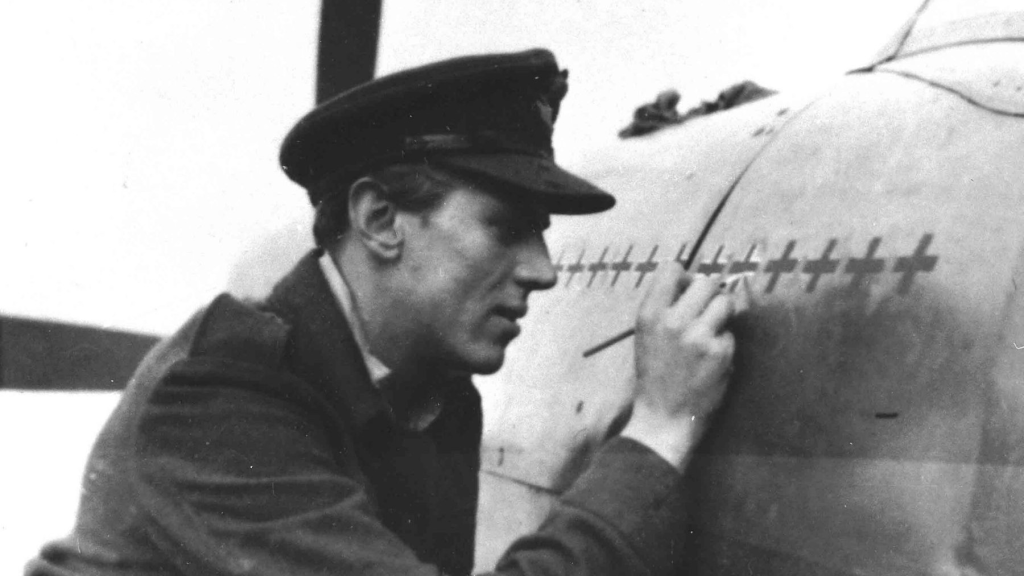









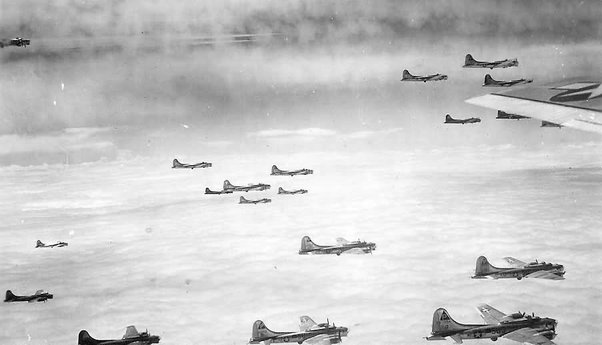


 Hush-Kit